

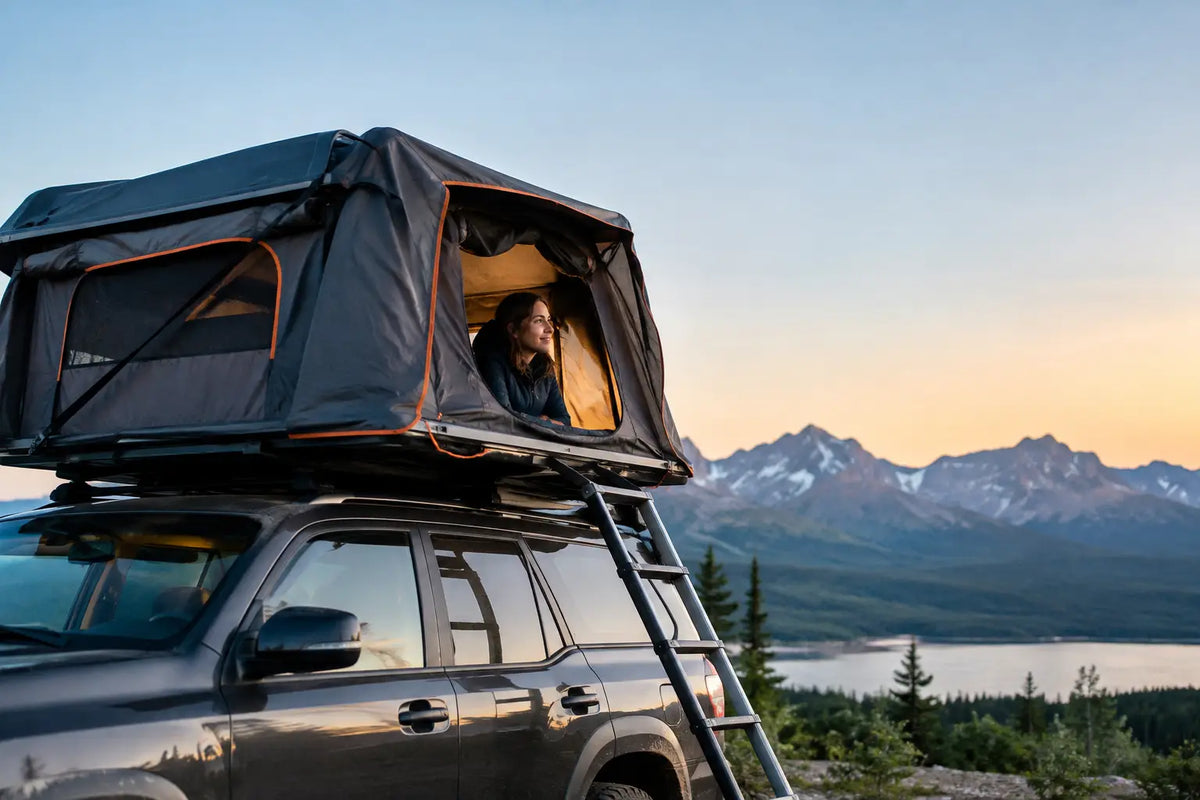
A rooftop tent changes the rhythm of a weekend away. Park up, unfold, climb in, and leave the muddy ground, uneven pitches and frantic tent-pole wrestling behind. But elevated comfort should not mean switching off. Good roof tent security lets you sleep well because your setup is prepared, not because you are worrying about it at 2am.
For most UK travellers, the real risks are less dramatic than people imagine. Opportunistic theft at a motorway stop, valuables left visible in the car, poorly secured mounting hardware, or a campsite choice that simply feels wrong are far more likely than a targeted attempt to steal a roof tent. The answer is not to turn every trip into a security operation. It is to build a few calm, repeatable habits into the way you travel.
Roof Tent Security Starts Before You Leave
The strongest security choice is a properly fitted tent. A rooftop tent should be mounted to roof bars or a rack that is rated for both the tent and the dynamic weight it carries while driving. Check the load rating for your exact vehicle, not just the bars. A setup can look solid on the driveway and still be unsuitable once wind, speed and rough roads enter the picture.
Use the mounting hardware supplied or approved for the tent and rack, and tighten it to the manufacturer’s specified torque. Check it again after the first journey, then make it part of your pre-trip routine. Metal settles, brackets bed in, and long motorway miles can expose movement that was not obvious at home.
Security nuts, locking plates and tamper-resistant fasteners can add another layer of deterrence. They will not make a tent impossible to remove, nor should any brand claim they will. Their value is in making removal slower, noisier and more conspicuous. That is usually enough to discourage an opportunist looking for an easy win.
If your tent is kept on the vehicle between trips, inspect the locks and mounting points regularly. Road salt, grit and winter weather can affect moving parts. A clean, maintained lock is more useful than an expensive one left to seize.
Park With Intent, Not Anxiety
Where you stop matters as much as what you lock. At service stations, trailheads and supermarket car parks, choose a well-lit space near footfall where you can keep an eye on the vehicle. Avoid leaving it at the far edge of a car park for hours, especially if your tent is clearly visible and your vehicle is loaded for an adventure.
When travelling, keep the tent closed and properly latched. Loose straps, a half-secured cover or gear attached externally do more than look untidy. They signal that the vehicle may be easy to interfere with, while creating a potential hazard on the road.
At camp, the best pitch is not always the most isolated one. A quiet spot is part of the appeal, but complete isolation can feel very different after dark. If you are new to wild-style camping or staying somewhere unfamiliar, choose a legitimate campsite or a permitted location with a clear arrival process, other respectful campers nearby and a sensible route out.
Trust your judgement. If a car park, lay-by or campsite feels unsettled when you arrive, move on before you unpack. A change of plan is a small price for a relaxed night.
Make Your Vehicle Look Occupied, Not Laden
A roof tent naturally advertises that you are travelling. You do not need to advertise everything else. Keep recovery gear, cooking equipment, bags and electronics out of sight whenever possible. Use the boot, a lockable storage box or discreet organisers rather than leaving kit on seats.
Do not leave passports, wallets, vehicle documents or spare keys in the car while you sleep. Keep essential items in the tent with you or in a secure pocket. This is particularly useful when you are moving between a pub meal, a shower block and camp, when small essentials are easiest to misplace.
If you use a rear awning room or tent extension, pack valuables away before heading out for a walk. Fabric creates useful living space, not a secure storeroom. Treat it like you would an open porch at home.
Protect the Vehicle, Not Just the Tent
A rooftop tent is only as secure as the vehicle beneath it. Lock doors every time, even on a friendly campsite. It is a simple habit that removes a common opportunity. Check that windows, sunroofs and tailgates are properly shut too, especially after packing in wet weather when everyone is rushing to get warm.
An alarm, tracking device or steering-wheel lock may be worthwhile depending on where you travel, the value of your vehicle and whether it is often parked on the street. These measures work best as visible deterrents combined with sensible parking, rather than as permission to leave expensive kit in plain sight.
Consider your insurance before a long trip. Vehicle policies vary on cover for accessories, modifications and items stored inside the car. Roof tents may be treated differently depending on whether they are declared accessories or permanent additions. Confirm what is covered, what evidence you would need for a claim, and whether your cover applies while camping away from home.
Take a few clear photographs of your tent, mounting system and serial number if available. Keep proof of purchase somewhere separate from the vehicle. It is unglamorous preparation, but it saves time if something does go wrong.
Night-Time Security at Camp
The reassuring part of sleeping above ground is that you have a clearer view of your surroundings and a physical separation from passing foot traffic. Still, your security routine should stay simple. Before bed, lock the vehicle, bring in valuables, put footwear somewhere accessible, and keep your phone charged and within reach.
Avoid hanging car keys from the tent ladder or leaving them in an awning pocket. Keep them close enough that you can leave quickly if needed, but not somewhere obvious from outside. If you are travelling with others, agree on who has the keys and where the torch lives. Small coordination makes a difference when it is dark and tiredness has set in.
A compact torch or head torch is more useful than relying on your phone battery. It lets you check a noise, find the ladder safely, or make an early departure without turning the whole campsite into a floodlit scene. Be considerate with lighting. Security should not come at the expense of everyone else’s quiet evening.
Never run a stove, barbecue, heater or vehicle engine in or near the sleeping area for warmth. This is a safety issue rather than theft prevention, but it belongs in the same bedtime routine. A comfortable tent and the right sleeping setup are safer than trying to heat a confined space with combustion.
The Ladder Is Part of the Setup
A ladder can be a point of concern for some first-time rooftop tent owners. In reality, most people do not need to remove or lock it every night. What matters is that it is stable, correctly angled and positioned on firm ground before you climb in.
If you are parked in a busy public place, folding the ladder away when the tent is unattended can reduce easy access and make the setup less inviting to curious passers-by. At a settled campsite, convenience may matter more. This is one of those decisions that depends on the location, the time of day and your instinct about the atmosphere around you.
Be Considerate With Wild and Overnight Parking
Roof tent security is also about avoiding conflict. A discreet, respectful overnight stop is less likely to attract unwanted attention than a sprawling camp arrangement in a place where overnight stays are restricted. Check local rules, respect private land, avoid blocking access, and do not assume a scenic car park is automatically a legal place to sleep.
Keep noise low, lights restrained and your footprint small. Arrive late only where appropriate, leave early when needed, and take every trace of your stay with you. The goal is freedom with responsibility - the kind that keeps wild places open and enjoyable for the next traveller.
There is no single lock or gadget that replaces awareness. The best roof tent security is a setup you trust, a vehicle you have prepared, and a pitch that lets you exhale when the doors close. Build those habits now, then let the open road do what it is meant to do: take you further from routine and closer to a proper night outside.
Share:
Roof Tent Versus Trailer Tent: Which Fits?
Can Hatchbacks Carry Roof Tents? What to Check