

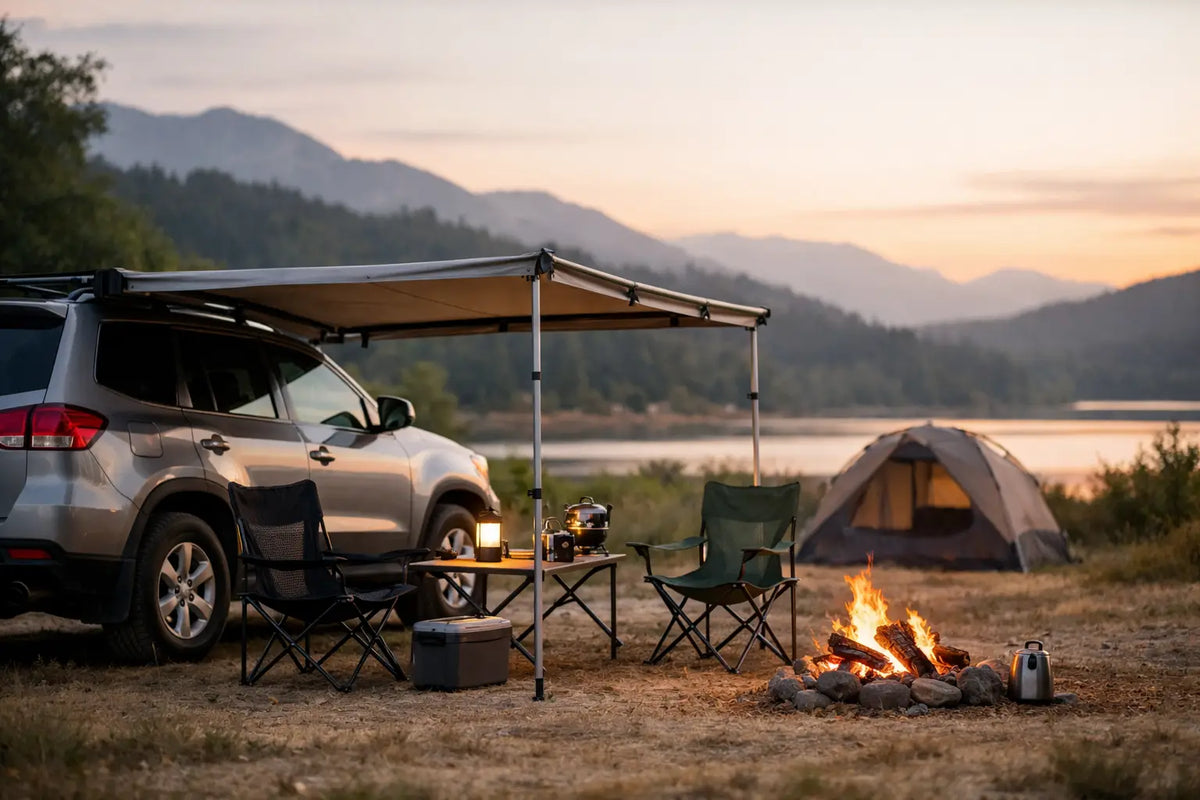
The boot is open, the kettle is on, and the rain that just rolled across the valley no longer decides whether you stay outside. A car awning shelter turns the side of your vehicle into usable living space in minutes: somewhere to cook, eat, change muddy boots or simply watch the weather without retreating indoors.
That matters on a British road trip. Our weather can move from bright sun to sideways rain before lunch, while a good campsite pitch is not always flat, sheltered or generous with space. An awning gives you a dependable base beside the car, so a quick overnight stop feels less like making do and more like a proper escape.
What a car awning shelter actually changes
A rooftop tent solves the sleeping question. A car awning shelter solves everything around it. It extends your campsite beyond the vehicle, creating a covered zone that makes mornings calmer and evenings longer.
Without one, cooking means balancing a stove on a damp patch of grass or huddling under an open tailgate. With one, you have room to prepare food, keep chairs dry and organise the kit that usually ends up scattered across the boot. For couples, it can become an outdoor dining room. For families, it is a much-needed buffer between wet coats, sandy shoes and sleeping space. For solo travellers, it creates privacy and shelter without the bulk of a separate tent.
The best setups do not make adventure more complicated. They remove the small frictions that make you call it a night too early.
Choose the right awning shape for how you travel
There is no single perfect awning. The right choice depends on your vehicle, the number of people travelling and how often you want to move camp.
Side awnings for simple, everyday cover
A straight side awning is the natural starting point for most vehicle campers. Mounted to a roof rack or crossbars, it rolls or folds out alongside the vehicle to create a broad strip of shelter. It is ideal for weekend trips, day stops and campsites where you want shade or rain cover without occupying every inch of your pitch.
This is usually the best choice if fast setup is the priority. Park, deploy, peg down when conditions require it, and your kitchen or seating area is ready. A side awning also suits drivers who use the same vehicle through the week and want a clean, low-profile system when it is packed away.
Wraparound coverage for bigger camps
A 270-degree awning extends around the side and rear of the vehicle. It offers a larger protected footprint and makes excellent sense for longer stays, family trips and off-grid touring where the vehicle is the centre of camp.
The trade-off is weight, cost and the space needed to deploy it. On a tight woodland pitch or a busy campsite, you may not have room to open every panel. But when the forecast is unsettled and you are staying put for a few nights, the extra cover can feel transformative.
Awning rooms and walls when privacy matters
Walls, side panels and enclosed tent extensions turn open shelter into a more protected room. They can block wind, provide privacy for changing, create a dry storage area or give children a place to play when the rain arrives.
They are valuable additions, not automatic essentials. If your trips are mainly one-night stops and frequent moves, an open awning is quicker and simpler. If you regularly camp on exposed coasts, travel with family or want a more capable base in shoulder seasons, walls are well worth considering.
Size matters more than the biggest footprint
It is tempting to choose the largest canopy your roof rack can carry. Bigger coverage sounds better, until it takes over a small pitch, overhangs a narrow track or becomes awkward to deploy alone.
Start with the usable area you need. Two people cooking and sitting out usually need enough cover for a compact table, chairs and access to the car. A family may need space for a larger table, a cool box, wet-weather storage and room to move around without constantly stepping into the rain.
Also consider the length of your vehicle and where the doors open. An awning should shelter the places you actually use: the rear hatch, sliding door, side doors or cooking station. Measure your roof rack, check its load capacity and confirm that the mounting hardware is compatible before buying. A premium awning is only as dependable as the rack and fixings holding it in place.
Weather protection is about the whole system
Waterproof fabric is only one part of an all-weather setup. The real test is how the shelter behaves when wind, rain and uneven ground arrive together.
Look for durable, weather-resistant fabric, strong hinges or arms, secure mounting points and reliable guy lines. A properly tensioned canopy sheds water more effectively and reduces flapping. Adjustable legs matter too, allowing you to lower one side so rain runs away from the vehicle rather than pooling overhead.
In light rain, an awning may stand happily with minimal support. In wind, use pegs and guy lines every time. In strong gusts, exposed locations or poor ground, bring it in. No awning should be treated as permanent architecture, and forcing one to stay open in worsening weather can damage the fabric, frame, vehicle or all three.
That is not a compromise. It is smart campcraft. A well-made shelter gives you confidence, but good judgement keeps it performing trip after trip.
Make setup part of the ritual, not the workload
The point of vehicle camping is freedom. If deploying your shelter feels like assembling flat-pack furniture in a car park, it is working against the whole experience.
Practise once at home before your first trip. Learn where the straps sit, how the legs lock, which pegs work best and how to pack the guy lines so they do not become a knot of wet cord at the end of the weekend. Then build a simple order into every stop: park with the weather in mind, deploy the awning, secure it, then set up the kitchen and chairs.
Think about orientation as well. In summer, angle your setup for afternoon shade. In rain, avoid placing the lowest edge where runoff will pass through your seating area. On windy pitches, park so the vehicle offers some protection, but never rely on the car alone to stop gusts lifting the canopy.
A few deliberate minutes at the start of camp can buy you hours of comfort later.
Pair your shelter with a campsite layout that works
The most comfortable campsites have clear zones. Keep cooking close enough to the vehicle for easy access to water and food, but leave a safe gap around the stove. Put chairs at the driest, most sheltered edge of the awning. Store muddy gear near the outside, and keep bedding, clothing and electronics inside the vehicle or rooftop tent.
If you use a tent extension, let it handle the jobs that clutter an open canopy: changing, storing bags, drying damp layers or giving dogs and children a sheltered retreat. The awning remains the social space, while the extension keeps the practical mess out of sight.
Lighting completes the setup. Soft, low-level lighting under the canopy is more useful than a harsh beam pointed straight down. It makes dinner easier, helps with packing after dark and keeps the camp feeling calm rather than clinical.
Care that protects your investment
An awning spends its life outside, so simple maintenance goes a long way. Never pack it away soaked if you can avoid it. If rain forces a fast departure, open it to dry as soon as you are home. Storing damp fabric can lead to mildew, odour and reduced performance.
Brush off grit before rolling it away, especially around moving parts and zips. Check bolts, brackets, legs and hinge points before longer trips. After coastal travel, rinse away salt and allow everything to dry thoroughly. Small habits preserve the clean operation and sharp appearance that make premium kit worth carrying.
At Urban Caveman, the goal is not to turn every stop into an expedition. It is to give your vehicle the comfort, protection and capability to go further with less effort.
The best car awning shelter is the one you will actually use. Choose a size you can deploy confidently, secure it properly, and let the weather become part of the view rather than the reason you head home.
Share:
Off Grid Camping Without Giving Up Comfort
Best Rooftop Tents for Better Weekend Escapes