

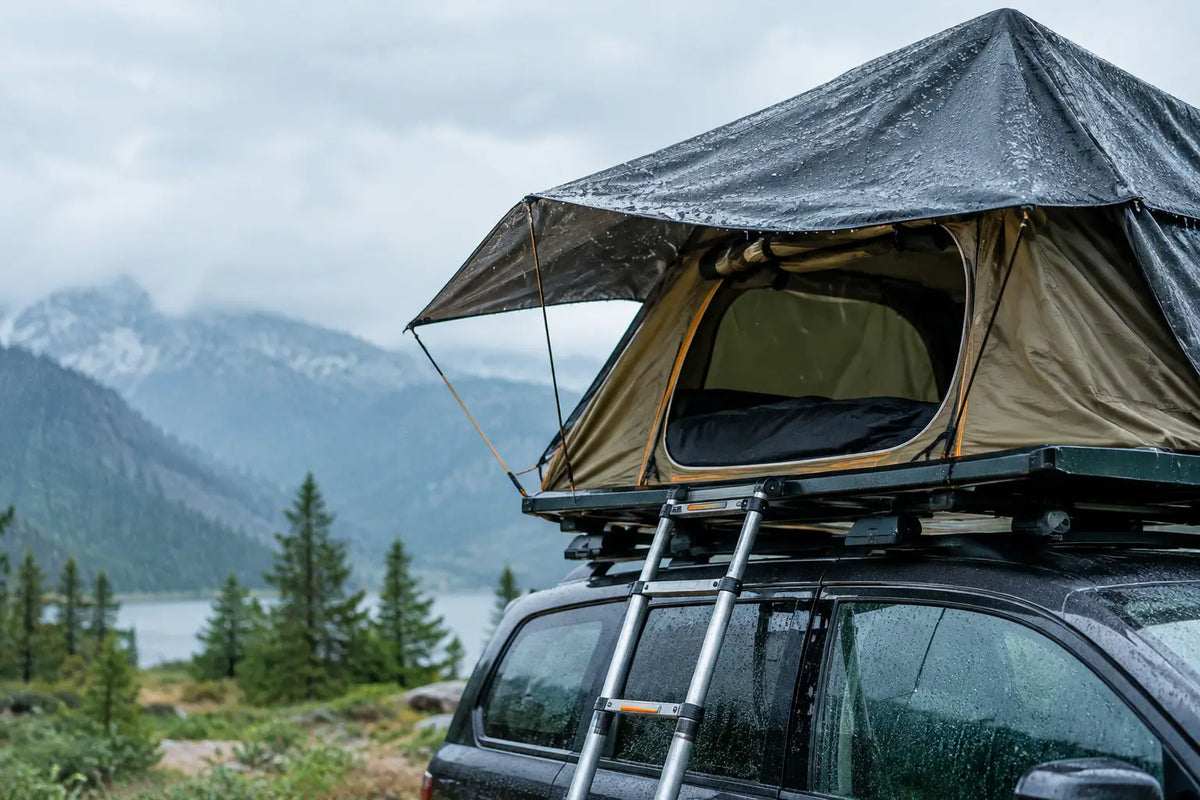
A wet Friday night on the edge of the Peaks is a proper test of any camping setup. Rain drumming overhead, wind moving through the trees, muddy boots waiting below. So, do rooftop tents leak? A well-made, correctly set-up rooftop tent should not leak in normal rain, including the persistent sort Britain does so well. But materials, design, setup and care all matter.
A rooftop tent is not simply a tent placed on a vehicle. It is an elevated shelter with fabric, poles, zips, seals, a hard shell or cover, and a mounting position exposed to wind from every direction. Buy quality, pitch it properly and look after it, and rain becomes background noise rather than a reason to pack up early.
Do rooftop tents leak in heavy rain?
Any tent can leak when it is poorly made, damaged, badly pitched or pushed beyond its intended conditions. That is true on the ground and on the roof. The difference is that a premium rooftop tent is designed around more controlled shelter: a taut fabric structure, a raised sleeping platform and rain protection that does not depend on finding the perfect patch of dry grass.
In sustained heavy rain, water should run down the fly or outer fabric and away from the sleeping space. The shell, base and mattress area should remain dry. Quality fabrics use waterproof coatings and durable construction, while window awnings and covered entry points help keep rain out without turning the tent into a sealed box.
There is a trade-off. More ventilation makes a tent more comfortable and reduces condensation, but exposed mesh or an unprotected opening can invite wind-blown rain. The best designs balance airflow with properly shaped awnings, storm flaps and zips that are protected from direct weather.
A rooftop tent will not make a coastal gale feel like a hotel room. Nothing outdoors can promise that. What it can do is give you a dry, stable and elevated place to sleep through the kind of rain that would make ground camping feel like a compromise.
Where rooftop tent water ingress usually starts
When water appears inside, the fabric is not always the culprit. In fact, the most common issues are often small setup errors or areas that need attention after a hard season of use.
Windows, doors and zips
Doors and windows are natural weak points because they interrupt the main fabric panel. Check that rain covers are fully deployed, storm flaps sit flat, and zips are fully closed. A window left slightly open for air on the windward side can bring in rain surprisingly quickly when the weather turns.
Wind direction matters more than many first-time owners expect. If possible, position the vehicle so the most protected side of the tent faces the prevailing weather. You cannot always choose your pitch, particularly on a quick stopover, but a small adjustment can keep driving rain off the entrance.
Loose fabric and pooled water
Fabric needs tension to shed water. If a roof tent is not opened fully, its support poles are not seated correctly, or a rainfly is hanging loose, water can collect in low points. That pooling adds weight, stretches fabric and can eventually force water through seams.
Before bed, step back and look at the tent from every angle. The roofline should be even, the fly should sit clear of the main body where designed to do so, and no panel should resemble a shallow basin waiting for the next downpour.
Seams, seals and ageing waterproof treatments
Seam tape, stitching and coatings do a great deal of quiet work. Over time, UV exposure, grime, tree sap and repeated packing can wear them down. This does not mean your tent has reached the end of its life. It means it needs the same sensible maintenance you would give any premium outdoor equipment.
If you spot dampness around a seam, clean and dry the area before using a compatible seam sealer. If water is no longer beading on the outer fabric, a suitable waterproof treatment can restore its ability to shed rain. Follow the tent manufacturer's care guidance rather than applying a random product from the garage.
The base, shell and mounting area
Water under the mattress is a different problem from rain entering through a window. Check the tent base, shell seals and drainage routes for debris, cracks or damage. Leaves and mud trapped around a hard-shell seal can stop it closing cleanly. On soft-shell models, make sure the travel cover is properly secured before setting off and that no fabric is caught in the closure.
It is also worth checking the roof bars and mounting hardware periodically. These parts do not normally cause a tent leak, but a tent that shifts or sits unevenly can affect how it opens, tensions and drains.
Rain inside is not always a leak
Waking to moisture inside a tent can be frustrating, but it is not automatic proof of failed waterproofing. Often, it is condensation.
Two people sleeping in a compact space release moisture through breathing. Add wet coats, damp footwear, a rainy evening and a warm mattress beneath you, and that moisture can collect on the inside of the fabric when it meets cooler outside air. It may appear as droplets on walls or windows, then run down and feel remarkably like a leak.
The fix is ventilation, even when it feels counterintuitive in wet weather. Use protected vents, crack a sheltered window where the design allows it, and avoid drying soaked clothing inside the sleeping area overnight. Keeping gear in an awning, vehicle or tent extension also frees up room and reduces moisture.
Condensation is more likely on still, humid nights than during a cold, breezy shower. That distinction helps with diagnosis. If the outer fabric is dry but the inner walls are damp in the morning, condensation is the likely answer. If water follows a zip line, appears at a seam or arrives during driving rain, investigate water ingress.
Set up for a dry night, not just a fast one
Rapid setup is one of the great pleasures of rooftop camping. Still, taking an extra five minutes before the weather closes in pays for itself at 3am.
Start by parking as level as the site permits. A level vehicle makes sleeping better and helps water drain as the tent design intends. Open the tent completely, seat all poles and tension straps, then fit the rainfly or window awnings before the first drops arrive.
Keep the entrance clear. A doormat, boot bag or covered space below the ladder stops wet footwear travelling into the tent. If you are using an annex or awning, make sure its attachment points are secure and its fabric is tensioned too. These additions are excellent for changing, cooking and storing kit, but only when they are set up to shed water rather than collect it.
After a wet trip, open the tent to dry as soon as practical. Packing it away damp occasionally may be unavoidable on a British road trip. Leaving it wet for days is not. Moisture encourages mildew, creates odours and can gradually affect coatings and fabric performance.
A simple first-rain check
The first wet outing with a new rooftop tent is the right time to learn its details. Inspect it in daylight, not after a midnight shower. Look for water beading and running off the exterior, then check inside around windows, door corners, seams and the base.
If you want to test it at home, set it up on a dry day and use a gentle hose spray. Do not blast it at close range with a pressure washer. That is not a realistic weather test and can force water into places rain would never reach. A measured test lets you spot an incorrectly positioned flap or a missed seam before your next escape from the city.
What to do if your rooftop tent does leak
First, identify the exact route of the water. Dry the tent fully, then inspect the relevant zip, seam, vent, fabric panel or seal. Avoid treating every surface at once. Targeted maintenance is cleaner, cheaper and more likely to solve the problem.
For a new tent, take clear photos and contact the retailer or manufacturer before applying treatments or making alterations. A reputable brand should stand behind its materials and workmanship. For an older tent, routine cleaning, seam sealing and reproofing can often restore weather performance without drama.
Do not accept a damp sleeping space as part of outdoor life. Urban Caveman is built around a better version of escape: one where the rain stays outside, the mattress stays inviting, and the journey remains the point.
The next time clouds gather over your planned pitch, do not automatically cancel. Check your setup, ventilate wisely and give your tent the care it deserves. A good rooftop tent lets you listen to the rain from a warm, dry place above the ground.
Share:
Camping Box Versus Roof Tent: Which Fits?