

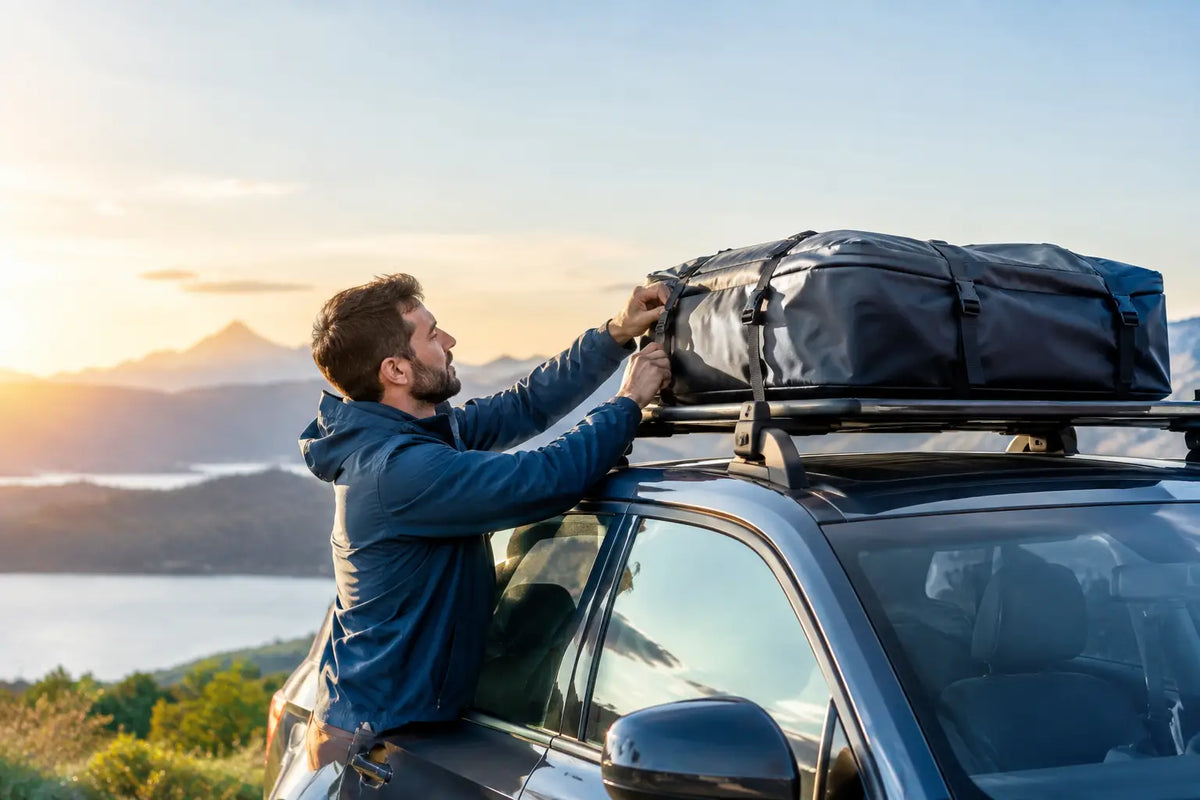
A rooftop tent changes the shape of a weekend. Leave the city after work, pull up by the coast or deep in the hills, and your camp is already with you. But roof rack safety is what makes that freedom feel effortless rather than uncertain. Before the first motorway mile, your vehicle, rack and load need to work as one system.
This is not about overthinking every trip. It is about getting the fundamentals right, so changing weather, rougher access roads and long-distance driving do not turn a good escape into a preventable problem.
Start with the limits that actually matter
Every roof-mounted setup has more than one weight limit. The figure on a rack box or product page is not the whole story. Your vehicle's roof rating, the rack's rating, the mounting system's rating and the weight of everything above the rack all matter.
The key figure while driving is the dynamic load rating. This is the maximum weight your vehicle roof is designed to carry when the car is moving. It includes the rack itself, crossbars, a rooftop tent, awning brackets, recovery boards, water, bedding and any other kit stored overhead.
The static load rating is different. It refers to what the roof can support when parked. This is why a properly fitted rooftop tent can safely hold sleeping occupants despite weighing far more than the dynamic limit would allow while driving. The load is no longer being pushed through corners, braking forces, potholes and crosswinds.
Do not assume that a stronger-looking rack raises your vehicle's roof limit. The vehicle manufacturer sets that limit. If any number is unclear, check the vehicle handbook and the instructions for every component before loading up. A premium setup should feel capable, but confidence comes from compatibility, not guesswork.
Roof rack safety begins with the right fit
A roof rack must be designed for your specific vehicle and roof type. Raised rails, flush rails, fixed mounting points, gutter mounts and bare roofs all require different hardware. A rack that appears secure can still be incorrectly matched if its feet, clamps or fitting kit are not approved for the vehicle.
Fit the rack exactly as instructed, including spacing between bars and the specified tightening sequence. Avoid tightening by feel alone where the manufacturer provides torque settings. Over-tightening can damage rails or mounting points; under-tightening can allow movement that worsens over time.
Once fitted, inspect the rack from every angle. It should sit square to the vehicle, with feet fully seated and no obvious gap, twist or loose trim. Check that locks engage properly if your system has them. This is also the moment to make sure the tailgate, sunroof and aerial still operate as intended.
If your rack has been through a season of salt spray, winter grit or muddy tracks, give it more than a glance. Clean the mounting points, look for corrosion, damaged threads, cracked plastic covers or distorted brackets, and replace compromised parts. Outdoor equipment is built for weather. It still deserves care.
Load the roof low, balanced and secure
Weight high on a vehicle changes how it feels on the road. Steering can become less immediate, body roll increases and sudden manoeuvres ask more of tyres, suspension and brakes. The answer is not to avoid bringing the gear that makes your trip better. It is to pack with intention.
Put the heaviest roof-mounted item in the position recommended by the rack or tent manufacturer, usually centred between the crossbars and aligned with the vehicle. Keep loose accessories to a minimum, and place dense, heavy kit such as tools, food crates and water lower down in the vehicle whenever possible.
A rooftop tent should be attached using its supplied mounting hardware or approved alternatives. Tighten fittings to the stated specification and check that the tent base sits evenly across the bars. An awning needs brackets designed to support both its weight and the vibration created on the road. Improvised fittings may look fine on the drive, then loosen over hundreds of miles.
For cargo boxes, boards or bags, use rated straps in good condition and follow the equipment maker's anchor-point guidance. Straps should be tight without crushing the load or twisting around sharp edges. Never rely on elastic bungee cords as the primary restraint for roof cargo. They are useful for light secondary retention, not for keeping valuable equipment out of the carriageway.
Check the setup before every departure
The best routine is short enough to use every time. Before setting off, walk around the vehicle and check:
- Rack feet, clamps and locking covers are fully engaged.
- Tent mounts, awning brackets and accessory bolts show no movement or damage.
- Straps are tensioned, tails are secured and no fabric can flap in the wind.
- The total roof load remains within the vehicle's dynamic rating.
- Your route does not include car parks, barriers or low clearances below your new vehicle height.
Drive for the vehicle you have become
With a rooftop tent or loaded rack, you are no longer driving the same vehicle you use for the weekday commute. It may be only a little taller and heavier, but that difference matters when conditions turn.
Give yourself more room for braking, take bends smoothly and reduce speed when strong crosswinds hit open stretches of road. Be measured around high-sided vehicles, exposed bridges and coastal routes, where a gust can move a loaded vehicle more sharply than expected. On narrow country lanes, remember that overhanging branches can catch an awning case, tent cover or cargo box long before they reach the windscreen.
Height deserves its own habit. Measure the vehicle at its tallest point once the rack and gear are installed, then keep that figure somewhere visible in the cabin. Do not estimate at the entrance to a multi-storey car park. Look for low bridges, height barriers, covered fuel station canopies and drive-throughs too. A roof setup gives you more possibilities at camp, but it requires more awareness between home and the trailhead.
Follow the speed guidance supplied with your rack, tent and accessories, and lower your speed further for rain, snow, poor visibility, uneven surfaces or a fully loaded vehicle. There is no prize for arriving first. A calmer pace protects your equipment, improves fuel economy and makes the journey part of the escape.
Make rooftop tent setup part of the safety system
Roof rack safety does not end when the engine stops. Choose level, firm ground before opening a rooftop tent. Engage the handbrake, select park or first gear as appropriate, and avoid setting up where the vehicle could shift or sink overnight.
Before climbing in, make sure the tent is fully unfolded, support poles are correctly seated and the ladder is locked at a stable angle on solid ground. The ladder is not just an access point. On many designs, it forms part of the tent's support structure, so it must never be left floating, perched on a loose rock or set too steeply.
Keep within the tent's stated occupancy and weight guidance. Children should always be supervised on the ladder, especially in wet conditions or after dark. If strong winds arrive, check the cover, hinges, ladder and awning connections before settling in. A well-designed tent is built to handle changing weather, but sensible campsite choices still matter.
Know when to stop and reassess
A new rattle, whistle, vibration or change in handling deserves attention. It may be harmless wind noise from a crossbar, but it may also be a loose strap or mounting point. Pull over safely and investigate rather than trying to diagnose it at speed.
The same applies after striking a pothole, brushing a low branch or driving a long, corrugated track. Check the rack, fittings and load before continuing. A few minutes beside the road is a far better trade than discovering a problem when you are miles from camp.
Your vehicle should carry the freedom to go further, not a question mark above the roofline. Set up carefully, inspect often and drive with the extra height and weight in mind. Then the road out of town stays what it should be: the easy first step towards a more comfortable night outside.
Share:
Roof Tent Review: Is It Worth the Upgrade?
Premium Overlanding Gear Buyers Guide for UK Trips