

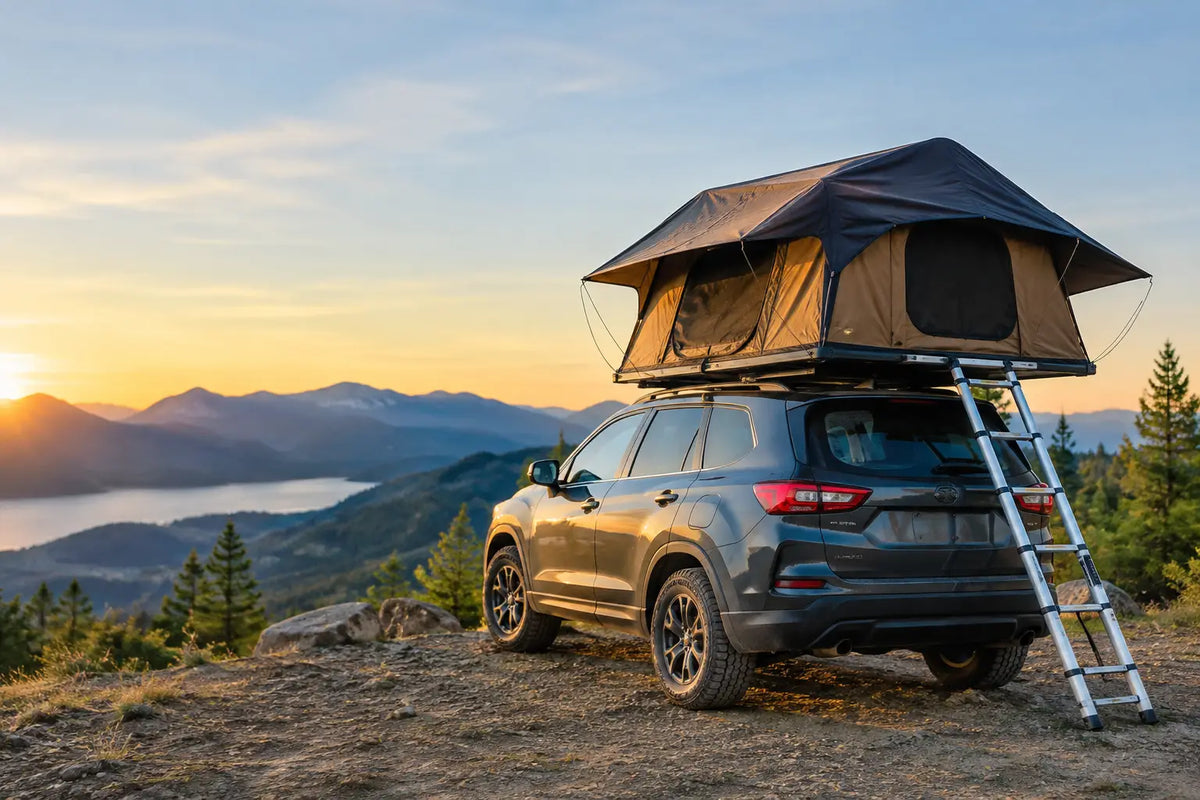
The campsite is full, the ground is wet, and daylight is fading. With the right rooftop tent, that does not have to become a battle with poles, pegs and a damp sleeping mat. This roof tent review looks at what actually changes when your vehicle becomes your basecamp - and whether the upgrade earns its place on your roof.
A rooftop tent is not for every driver or every kind of trip. It adds weight, affects fuel economy and asks more of your vehicle than a ground tent ever will. But for people who value quick escapes, proper sleep and the freedom to stop somewhere beautiful without turning setup into a chore, it can completely change the way weekends away feel.
What a Roof Tent Gets Right
The biggest advantage is not simply sleeping off the ground. It is the sense that camp is ready when you are. Park up, release the cover, extend the ladder and climb into a proper, elevated sleeping space. On a short break after a long week, that speed matters.
Ground tents can be excellent, but they demand suitable ground, a dry pitch and enough energy to get organised after driving. A rooftop tent removes much of that friction. You are above puddles, mud and uneven ground, while the mattress stays in place and your bedding can often remain packed inside between trips.
That elevated position also feels more private. You can wake up above the bustle of a busy campsite, unzip the windows and take in the view from bed. It is a small shift, but it makes a familiar trip feel less like making do and more like going somewhere on purpose.
For couples, the appeal is obvious: more comfort with less faff. For solo travellers, it is the confidence of a simple, contained setup. Families may find a roof tent works best as part of a wider system, with an annex or tent extension creating room for changing, storing kit or giving older children their own ground-level space.
Roof Tent Review: The Trade-Offs That Matter
A premium rooftop tent should make adventure easier, not pretend there are no compromises. The first is vehicle compatibility. Your roof bars, rack and vehicle roof must be rated for the tent's dynamic load while driving. The tent also needs to fit the usable bar spread and roof dimensions, not just look plausible in a product photo.
Dynamic load is the figure to focus on when choosing a setup. Static capacity, when the vehicle is parked, is usually far higher because the weight is distributed through the vehicle rather than carried through corners, braking and motorway speeds. Still, check your vehicle handbook and rack specifications before buying. If you are unsure, get confirmation from a qualified fitter.
The second trade-off is height and wind resistance. A roof tent raises your vehicle profile, so low car parks, height barriers and some ferries need more attention. You may also notice additional wind noise and increased fuel use, especially on long motorway journeys. A sleek hard-shell design can reduce that penalty compared with a bulky soft-shell tent, but it cannot remove it entirely.
Then there is the question of access. Climbing a ladder is easy for most able-bodied campers, yet it will not suit everyone. If you travel with very young children, limited-mobility companions or dogs that cannot be lifted safely, consider how the sleeping arrangement works in real life rather than only on a perfect summer weekend.
None of these points rules out a rooftop tent. They simply separate a good purchase from an expensive impulse.
Comfort Is the Reason Many People Switch
Comfort is where a rooftop tent becomes more than an overlanding accessory. A supportive integrated mattress, a flat sleeping platform and insulation between you and the ground can make a cold, damp night much more manageable. You are not trying to soften stones with a thin camping mat. You are stepping into a space designed for sleep.
Look closely at mattress thickness and density, internal dimensions and ventilation. A tent can be beautifully made but still feel cramped if two adults cannot turn comfortably or store a few essential items beside them. If you are tall, check the stated internal length rather than assuming a two-person tent will fit you.
Ventilation deserves more attention than it usually gets. British weather can move from mild to wet to cold in a single evening, and condensation is part of camping life. Multiple mesh windows, roof vents and breathable fabric help manage moisture overnight. Open them appropriately, even when the temperature drops, and avoid sealing every opening in the belief that it will keep you warmer.
The best roof tents balance all-weather protection with airflow. Strong waterproof fabric, taped seams, a quality rainfly or shell design and durable zips matter. So does the way the tent handles wind. A tent that feels solid in a showroom should still inspire confidence on an exposed coastal pitch at 2am.
Hard Shell or Soft Shell?
This is the choice that shapes how you travel. Hard-shell rooftop tents are typically faster to open and close, with a clean, low-profile form when packed down. Many use gas struts, making setup remarkably quick. They suit drivers who want spontaneous overnight stops and dislike spending time packing away wet fabric in the morning.
Soft-shell tents usually offer more internal space for the money and can create a larger sleeping platform when folded out. They can be a strong option for families or campers who plan to stay put for several nights. The trade-off is a longer setup and pack-down process, along with a bulkier cover and more fabric to manage in wet conditions.
There is no universal winner. If your ideal trip means leaving London on Friday evening, arriving late and waking beside a lake on Saturday, rapid deployment may be worth paying for. If you are building a larger holiday camp with chairs, cooking kit and an annex, the space of a soft-shell model may be more useful.
What to Check Before You Buy
Do not judge a rooftop tent by its closed dimensions alone. Think through the whole ownership experience: fitting it, storing it, travelling with it and living in it in poor weather. The details tell you whether the tent is designed for real weekends, not just launch-day photography.
Check the packed weight, the roof-bar requirements, the ladder capacity and the maximum recommended vehicle height once installed. Ask whether bedding can stay inside when closed, as this is one of the practical details that makes quick getaways genuinely quick. Also consider where you will store the tent if you do not want it on the vehicle year-round.
Material quality matters, but it should be assessed as a system. Look for a durable shell or cover, weather-resistant fabric, reinforced mounting points, dependable hinges and a ladder that does not flex under normal use. A good warranty adds reassurance, especially with equipment that lives outside and travels at speed, but it should support solid construction rather than substitute for it.
It is also worth checking what is included. Some tents arrive ready for installation; others require roof bars, mounting hardware, an anti-condensation mat, a thermal liner or an annex to reach the setup you had in mind. Factor in the complete cost before comparing prices.
Is a Roof Tent Worth It in the UK?
For UK camping, a roof tent makes particular sense because it reduces reliance on perfect ground conditions. Grass pitches can be waterlogged, wild camping spots can be uneven, and a gravel or hardstanding area is no longer an automatic deal-breaker. You still need permission to stay where you park, of course, but your sleeping setup is less dependent on finding a flawless patch of level turf.
It is especially worthwhile if you camp regularly and value time. A tent used once a year is difficult to justify purely on convenience. A tent used for monthly weekends, road trips, surf missions or multi-stop touring becomes part of your vehicle's capability. It replaces setup stress with a repeatable routine.
Urban Caveman rooftop tents are built around that idea: urban comfort when you need it, caveman spirit when you want it. The right model should feel refined enough for a Friday-night departure and tough enough for the weather waiting beyond the city lights.
The Right Tent Makes You Leave More Often
The strongest argument for a rooftop tent is not that it makes camping more extreme. It makes getting away less complicated. You can keep the car stocked, watch the forecast, choose a direction and leave.
Choose a tent that suits your vehicle, your sleeping needs and the pace of trips you actually take. Then give it the job it was made for: turning an ordinary parking spot, a quiet campsite or a remote view into a comfortable place to wake up.
Share:
How to Pack a Roof Tent Without the Struggle
Roof Rack Safety for Better Weekends Away