

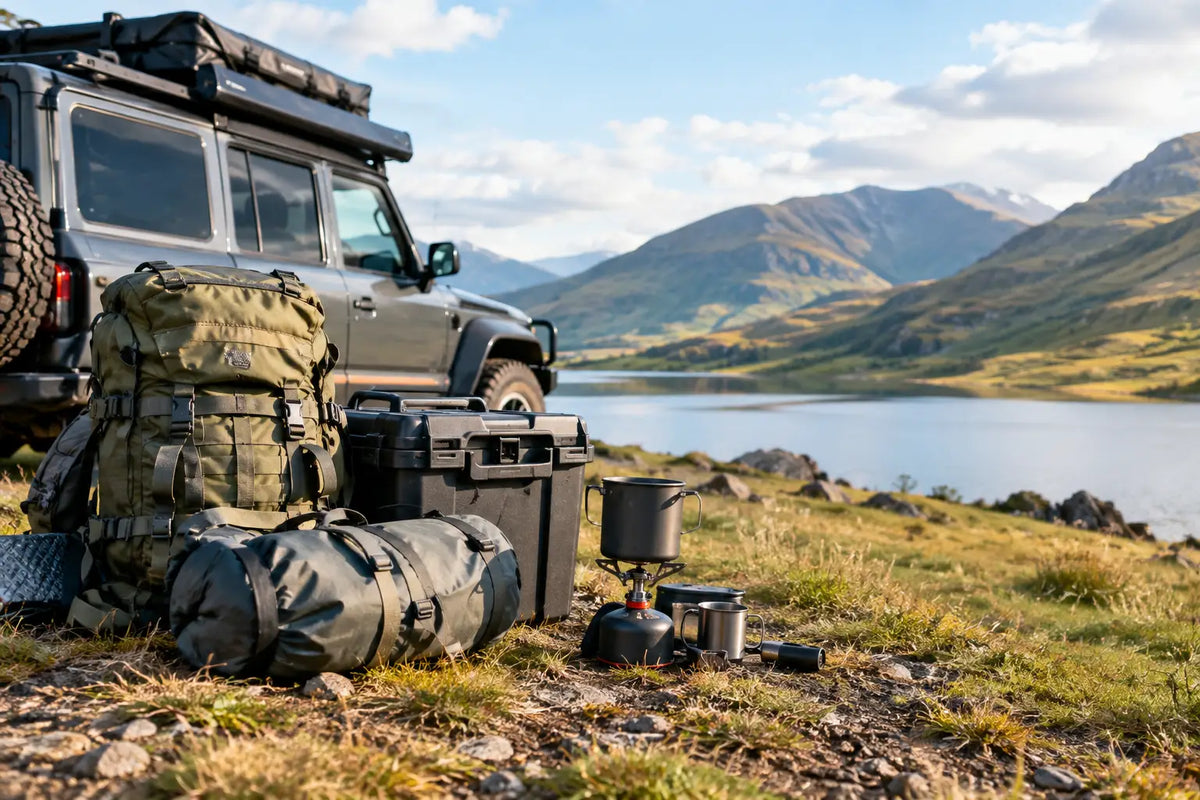
A wet lay-by in the Highlands, a late Friday departure from London, a last-minute bank holiday escape: this is where a premium overlanding gear buyers guide earns its place. The right setup does not ask you to tolerate the outdoors. It turns your vehicle into a reliable basecamp, so you can leave the city behind without leaving comfort, sleep or shelter to chance.
Premium gear is not about loading every available surface with kit. It is about choosing the few pieces that work together, set up quickly and keep performing when the forecast turns. Start with how you actually travel, then build a system that makes every mile beyond the city feel easier.
Start with the trips you want to take
Before comparing fabrics, hinges or mounting systems, picture a real weekend away. Are you driving to a quiet campsite after work? Covering long distances through Wales or Scotland? Travelling with children? Heading off-grid where shelter and a decent night's sleep matter more than a campsite hook-up?
Your answers determine the gear that deserves the largest share of the budget. A couple making frequent two-night escapes may value a low-profile rooftop tent and fast-deploy awning above all else. A family staying in one place for several days may get more from a spacious tent extension that creates a dry living area. For longer, remote routes, weather protection, storage and recovery planning become more valuable than visual upgrades.
Do not buy for the expedition you might take once. Buy for the journeys you will make often. Premium equipment should remove the friction that usually stops you going away in the first place: awkward packing, slow setup, damp bedding and nowhere comfortable to sit when rain arrives sideways.
Premium overlanding gear buyers guide: begin with sleep
Sleep is the dividing line between a trip that restores you and one that sends you home early. A rooftop tent is often the centrepiece of a premium vehicle-camping setup because it lifts you above uneven ground, mud and surface water, while giving you a dedicated sleeping space ready to deploy.
Choose the rooftop tent for your vehicle and routine
The tent must suit both your vehicle and the way you use it. First, check the roof's dynamic load rating, the roof bar rating and the tent's packed weight. Dynamic capacity applies while driving. Once parked, the supported static load is different, but it still depends on the vehicle, bars and mounting arrangement. Follow the vehicle manufacturer's guidance rather than relying on a general rule from a forum.
Then consider the trade-off between packed profile and living space. A slimmer, lighter tent can be easier to live with day to day, especially if your car still handles school runs and commutes. A larger model may offer more internal room, thicker bedding or space for a family, but it will affect fuel use, vehicle height and lifting effort.
Setup speed matters more than most first-time buyers expect. If getting to bed takes ten minutes rather than an hour, you will use the setup in more places and more seasons. Look for a design with intuitive deployment, a supportive integrated mattress, ventilation that can be managed in poor weather and materials made for repeated use, not one optimistic summer holiday.
A rooftop tent does not make every campsite practical. Low branches, height barriers and narrow multi-storey car parks need more thought. That is the price of elevated comfort. For many drivers, it is a trade worth making, provided the tent can stay on the vehicle without making ordinary life difficult.
Make shelter part of the system
A tent gives you a bedroom. An awning gives you somewhere to live. This becomes obvious the first time breakfast coincides with rain, or the wind picks up just as you are trying to cook.
For quick overnight stops, a compact side awning creates an instant sheltered zone for chairs, boots and the stove. It should be simple enough to deploy when daylight is fading, yet stable enough to secure properly. Never treat an awning as invincible in high wind. Peg it down, use suitable support poles and take it in when conditions demand it.
For longer stays, an awning room or tent extension changes the shape of the trip. It gives wet coats, muddy footwear and cooking gear somewhere to go that is not your sleeping area. It also creates useful privacy on busy sites and extra protection when travelling with children or dogs.
The important question is not whether an extension looks impressive in product photos. It is whether you will use the extra room enough to justify its packed size and setup time. Couples who move every day may prefer the speed of a simple awning. Families and slower travellers will often appreciate the breathing room.
Buy for British weather, not brochure weather
UK overlanding asks more from gear than a cloudless campsite test. Rain can arrive at any hour, wind can change an exposed pitch quickly, and condensation can make a warm night uncomfortable if ventilation is poor.
Premium construction shows up in the details: weatherproof fabric, protected seams, dependable zips, durable frames and fittings that continue to operate after mud, salt air and repeated packing. The aim is not to find a product that can survive one hard weekend. It is to choose one you can trust after dozens.
Ventilation deserves equal attention. A sealed tent may feel reassuring in rain, but moving air is essential for a more comfortable night and a drier interior. Look for adjustable windows, mesh panels and openings that can remain useful when the weather is less than perfect.
Also think about the gear after the trip. Can it be dried properly at home? Is the cover straightforward to close? Are replacement parts and customer support available if a strap, fitting or zipper eventually needs attention? Premium ownership includes the years after checkout, not just the first night away.
Build around your vehicle, not an imagined expedition rig
A capable setup does not require a huge 4x4 with oversized tyres and a roofline full of accessories. Estates, SUVs, vans and many everyday vehicles can become excellent basecamps when weight, mounting and storage are properly considered.
Keep the centre of gravity in mind. Heavy equipment on the roof changes handling, particularly on rural roads, in crosswinds and during emergency manoeuvres. Pack dense items low in the vehicle where possible, secure everything for travel and allow extra braking distance. A premium setup should make you feel more prepared, never less in control.
Storage is where good intentions either hold up or fall apart. Give every essential a designated place: bedding inside the tent, cooking equipment in a clearly accessible box, recovery and safety equipment separate from food, and wet gear contained away from dry layers. When the boot is organised, camp setup becomes calmer and departure takes minutes rather than an argument.
What premium really buys
The most expensive option is not automatically the best. Premium should mean better materials where they matter, considered design, clear compatibility information and a setup you are genuinely willing to use. It should also mean confidence when the weather is poor and support when something needs sorting.
Pay for the parts that affect sleep, safety, weather protection and repeated setup. Be more selective with decorative accessories, novelty gadgets and equipment that duplicates something already in your car. The cleanest rigs are often the most useful because every item earns its space.
At Urban Caveman, the focus is on that upgrade: elevated sleeping, practical shelter and straightforward vehicle-based camping for life beyond the city. When comparing any premium supplier, check the delivery and returns process, warranty terms and the help available before and after purchase. Clear support is part of the product.
The essentials that complete the camp
Once the tent and shelter are sorted, a small group of supporting essentials makes the whole system work harder:
- A safe, stable cooking setup with enough fuel for the trip and a wind-aware place to use it.
- Warm, packable bedding suited to the coldest likely overnight temperature, not the daytime forecast.
- Levelling aids, a head torch and simple camp lighting for safer setup after dark.
- Water storage, a first-aid kit and a charged power solution for navigation and essential devices.
- Recovery and emergency equipment appropriate to your route, experience and vehicle.
Test before you disappear off-grid
Fit the system well before departure, then practise opening the tent, deploying the awning and packing it away on your driveway or a dry weekend nearby. Check clearances, learn where every strap goes and find out what is awkward while the stakes are low.
Your first trip does not need to be remote. Choose a site within easy reach, arrive with time to set up and make a note of what you used, what stayed buried and what would make the next night better. That is how a collection of premium gear becomes your own dependable escape system.
The best overlanding setup is the one that gets you moving when the week has been loud, the forecast is imperfect and the open road is calling. Pack with purpose, choose comfort that lasts, and let your vehicle carry you further from routine.
Share:
Roof Rack Safety for Better Weekends Away
Family Car Camping Setup for Better Weekends