

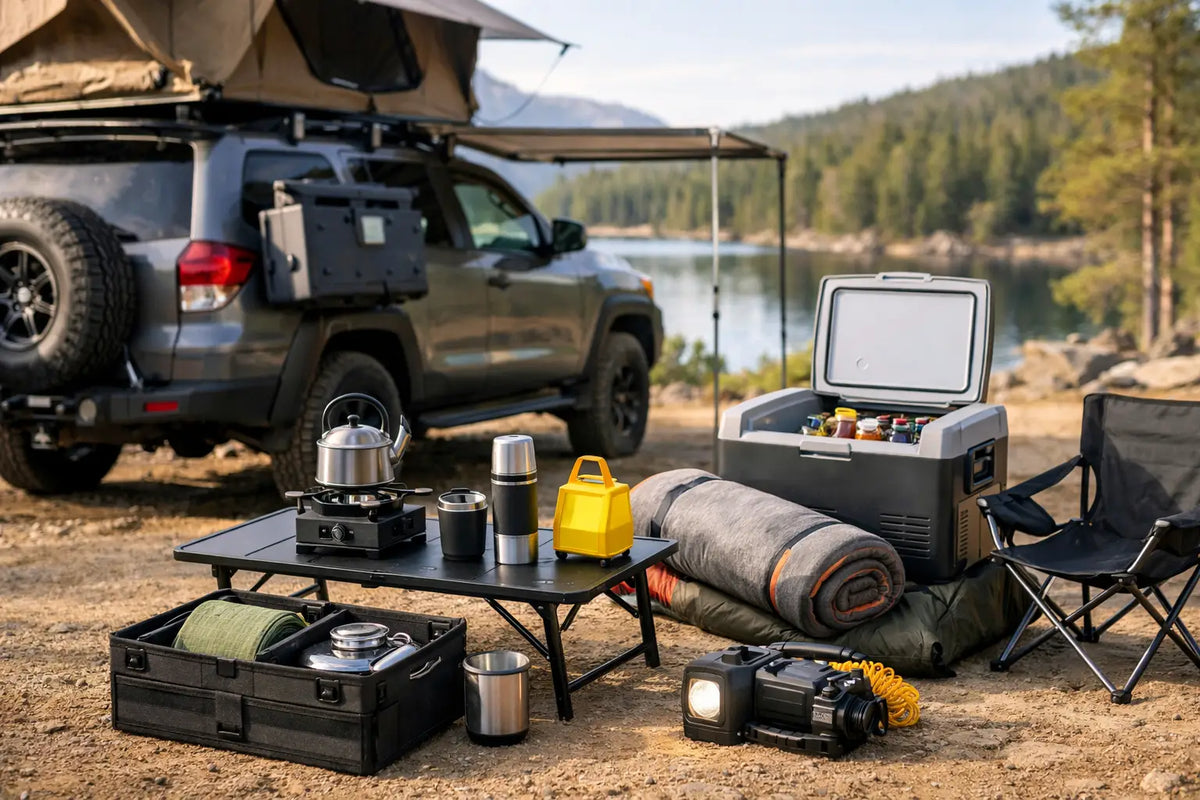
A Friday escape should not begin with an hour of wrestling poles, hunting for a torch or sleeping badly on uneven ground. The right vehicle camping accessories turn the car you already drive into a basecamp that is ready for late arrivals, wet weather and the long way home.
This is not about filling every spare inch with gear. It is about choosing equipment that removes friction: a dry place to sleep, usable shelter when the forecast turns, light where you need it and storage that keeps breakfast separate from muddy boots. Buy for the trip you want to take, then leave room for the trip that goes off-plan.
Start with the system, not the shopping list
The strongest vehicle camping setup works as one considered system. Your sleeping platform, shelter, access, cooking space and storage should support the same simple outcome: arrive, park, set up quickly and enjoy being outside.
For most UK road trips, sleep and weather protection deserve the largest share of your budget and vehicle space. A rooftop tent lifts you above cold, uneven or sodden ground, while an awning creates the outdoor room that makes a campsite feel civilised. Add a tent extension when you need a changing area, private space or somewhere to sit out a shower.
That order matters. A premium lantern is useful, but it cannot rescue a night spent in a leaking ground tent. Start with the parts that protect comfort, then build outward.
Match gear to the way you travel
A couple taking spontaneous one-night breaks needs a different kit from a family settling into a campsite for four days. If you move daily, prioritise fast setup and compact packing. If you stay longer, a larger sheltered living area and better kitchen organisation start to matter more.
Think about where you actually go, too. A summer coastal weekend may call for shade and airflow. A shoulder-season trip to Snowdonia or the Highlands calls for wind stability, warm bedding and a place to get out of rain. There is no single perfect loadout. There is a setup that makes your usual trips easier, then a few carefully chosen pieces that extend the season.
Vehicle camping accessories for better sleep
Sleep is where vehicle camping becomes an upgrade rather than a compromise. The best sleeping setup is dry, quick to deploy and sufficiently comfortable that you wake ready to walk, ride or drive again.
A rooftop tent is the centrepiece for many drivers because it creates a dedicated bedroom above the vehicle. It keeps bedding contained, saves searching for level ground and delivers a clear separation between the sleeping area and the rest of camp. Hard-shell models generally offer the fastest open-and-close routine and a clean roofline for regular travel. Soft-shell designs can provide more room for the money, although they often take longer to pack away and need more care in wind.
Do not assess a tent by berth number alone. Check the usable mattress dimensions, ladder position, internal headroom and the space left for bedding when closed. If you are tall, broad-shouldered or travelling with a child, those details are the difference between a clever purchase and a cramped one.
Bedding deserves the same attention. A proper duvet or quality sleeping bags rated for the temperatures you expect, fitted sheets and compact pillows transform the experience. In Britain, an insulated layer under the mattress can be as valuable as extra warmth on top. Cold rises through a floor long before it announces itself in the forecast.
Build a shelter that works in British weather
An awning changes the rhythm of camp. It gives you a dry threshold between vehicle and outdoors: somewhere to take off wet layers, make coffee, cook under cover and sit through a passing shower without retreating to bed.
Choose its size with restraint. A broad awning is generous when parked, but it may add weight, catch wind and demand more pitching space. For frequent overnighters, a compact side awning is often the smarter choice. For family trips, long stays or kit-heavy adventures, the extra room from an extension earns its place quickly.
Wind is the trade-off that separates good shelter from wishful thinking. Guy lines, solid anchor points and appropriate pegs are not optional extras when exposed weather rolls in. Always angle drainage away from doors, lower the awning before leaving camp and pack it away if conditions become unsafe. Shelter should make camp more capable, not create another thing to worry about.
A ground mat is another modest addition with outsized value. It keeps mud out of the sleeping area, defines a clean cooking zone and makes camp feel less temporary. Choose a durable, easy-clean material rather than something so bulky that it stays at home.
Power and light without clutter
Power is useful when it supports a real need. It is unnecessary when it becomes another complicated system to charge, cable and protect from rain.
A compact power station suits campers who need to charge phones, cameras, head torches or a small compressor. For longer stays, a solar panel can extend independence, but only if you have daylight, a sensible place to position it and enough draw to justify carrying it. Short weekenders may be better served by a high-capacity power bank and a vehicle charging lead.
Light needs layers. A head torch is for moving around, setting up after dark and finding the loo. A warm camp lantern is for eating and unwinding. Small, low-level lights near the entrance or ladder help avoid the midnight stumble. Avoid lighting the entire field like a car park. You came for the dark sky, too.
Keep the useful things easy to reach
Poor storage creates the familiar campsite ritual of unpacking half the vehicle to find one pan. Good storage means each item has a home, and the things you use first are accessible first.
Start with tough, stackable boxes for kitchen equipment, food and camp essentials. Use soft bags for clothing and bedding where they can flex around awkward spaces. A separate, waterproof container for recovery gear, wet footwear and muddy equipment prevents the rest of your setup becoming grim by Sunday morning.
A simple packing order works well: shelter and tent access first, then kitchen, then bedding and personal kit. Keep the emergency essentials - first-aid kit, torch, tyre inflator, water and warm layers - available without unloading anything. It sounds obvious, but it is exactly the discipline that makes a late roadside stop calm rather than chaotic.
If you need a practical starting point, organise your kit into these four zones:
- sleep: tent, bedding, ladder light and night-time essentials
- shelter: awning, extension, ground mat, pegs and guy lines
- living: stove, water, chairs, table and food storage
- vehicle: recovery equipment, tools, tyre kit and charging gear
Do not ignore weight, fit and security
Premium gear should look composed on the vehicle, but the numbers matter more than the silhouette. Check the roof rack rating, vehicle roof load limit and the dynamic load rating before choosing a rooftop tent or awning. Dynamic load is what the vehicle can safely carry while driving; static load is the supported weight when parked. They are not interchangeable.
Also consider height. A roof tent may change access to multistoreys, ferry decks, low branches and daily parking. It can add wind noise and affect fuel economy, particularly on motorway runs. For some drivers, that is a fair exchange for a bedroom that travels with them. For others, a compact ground-based sleep system is more practical.
Security is part of ease of use. Use appropriate locking mounts where available, inspect fixings routinely and avoid leaving high-value loose equipment on display. Before every trip, check straps, hinges, ladder hardware and roof bar fasteners. Five quiet minutes on the drive can prevent a very loud problem later.
The accessories worth delaying
Not every smart-looking product belongs in your first build. Oversized cooking stations, elaborate shower systems and multiple decorative lights can wait until they solve a problem you have genuinely encountered. Your campsite should feel considered, not like a catalogue strapped to a roof rack.
Urban Caveman is built around that distinction: equipment that brings comfort and confidence to life beyond the city, without turning setup into a project. Choose durable pieces that earn their space in every season, and let each trip show you what is missing.
The best test is simple. When Sunday evening arrives, your kit should pack down without an argument, your vehicle should still feel driveable, and the next escape should already feel within reach.
Share:
Overlanding Gear Checklist for Better UK Escapes
Off Grid Camping Without Giving Up Comfort