

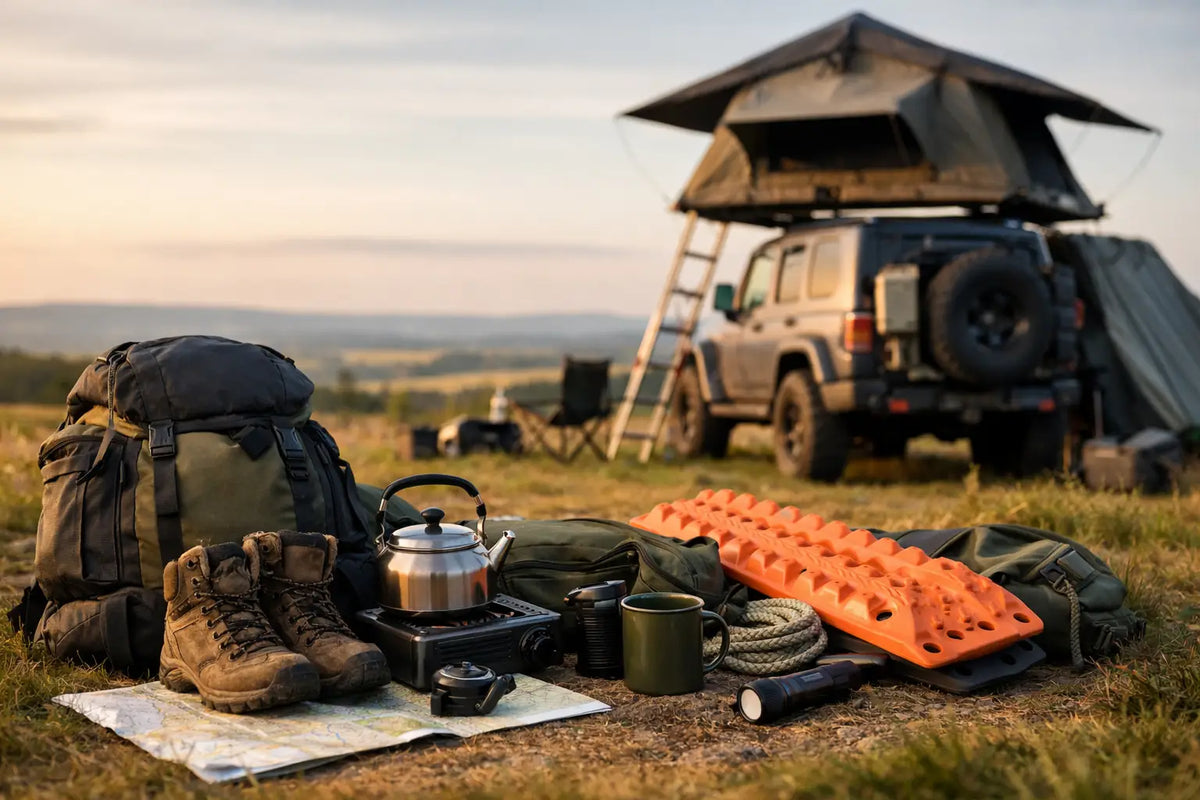
The best overlanding gear checklist is not a catalogue of expensive kit. It is a system that gets you from Friday traffic to a dry, comfortable camp without turning every stop into a packing puzzle. For UK travel, that means planning for rain, narrow lanes, changeable temperatures and campsites that can become muddy long before breakfast.
Build around how you actually travel. A couple leaving London for two nights in Snowdonia needs a different loadout from a family spending a week on the North Coast 500. The goal is the same: carry less clutter, set up faster and stay comfortable enough to enjoy the reason you came.
Start with the vehicle, not the accessories
Your vehicle is the foundation of every overland trip. Before adding awnings, storage boxes or a rooftop tent, confirm its roof load rating, payload, tyre condition and service schedule. A beautifully equipped vehicle that is overweight or poorly maintained is not ready for the trail.
Check both dynamic and static roof load figures. Dynamic load is what the vehicle can carry while driving; static load is what it can support when parked. A rooftop tent may be well within the static figure but still need careful matching to roof bars and the vehicle's dynamic limit. Follow the vehicle and rack manufacturer guidance rather than guessing.
Also consider the less glamorous essentials: a current MOT, fluids at the correct level, working lights, spare fuses, a usable spare wheel or tyre repair solution, and breakdown cover that suits the routes you plan to take. In remote parts of the Highlands, Wales or the North York Moors, a small mechanical issue can eat an entire weekend.
Load smart, drive better
Keep heavy items low and close to the centre of the vehicle. Water, recovery equipment and cooking boxes should not live high on a roof rack if they can sit securely in the boot. Roof space is valuable, but it changes handling, fuel use and clearance. Be especially aware of car parks, low branches and height barriers when your tent is mounted.
A simple storage plan makes a bigger difference than buying another gadget. Give every category a home: sleep kit, kitchen kit, food, clothing, tools and recovery. If an item cannot be found in the dark or packed away in a minute, it will eventually become campsite clutter.
Overlanding gear checklist: shelter and sleep
The shelter you choose sets the pace of camp. Ground tents remain light and flexible, but they can mean wet floors, uneven pitches and longer setup after a full day behind the wheel. A rooftop tent creates a raised sleeping space, keeps bedding contained and turns camp into a quick, repeatable routine.
For couples and small families who want more than a place to sleep, think in zones. Your sleeping area should stay clean and dry. Your awning or tent extension becomes the living space: somewhere to cook in light rain, pull on boots, sit with a brew and keep kit out of the vehicle. That separation is the difference between camping as an endurance test and camping as a proper break.
Your shelter and sleep kit should cover:
- Rooftop tent or ground tent, plus the correct mounting hardware or footprint
- Awning, tent extension or tarp for covered living space
- Sleeping bags or duvets rated for the coldest likely night, not the forecast at home
- Pillows, fitted bedding and an insulated mattress or sleeping mat
- Camp chairs, a compact table and a warm layer for sitting outside
Urban Caveman equipment is designed around that faster camp rhythm: elevated sleep, practical covered space and a cleaner transition from road to rest. But the principle applies whatever system you choose. Prioritise setup that you will genuinely use after a long drive.
Cook, wash and eat without the faff
Overlanding meals do not need to be complicated. The best camp kitchen is compact, stable and easy to clean, with enough capacity for the people travelling. A single-burner stove suits solo trips and quick breakfasts; two burners make more sense for families or anyone who considers a proper dinner part of the adventure.
Carry fuel safely and check compatibility before leaving. Keep a lighter or matches as backup, plus a windbreak if you expect exposed camps. For food, use one sealed crate or cool box rather than loose bags rolling around the boot. Bring a chopping board, sharp knife with a sheath, pan, mug, plate, washing-up bowl and biodegradable washing-up liquid.
Water deserves more thought than most people give it. For a weekend, a few sturdy containers may be enough. For longer, off-grid stretches, carry more than you think you need and know where reliable refill points are. Keep drinking water separate from water reserved for washing if space allows.
Do not forget waste. Pack rubbish bags, a small bin and a method for taking everything home. Leave campsites, lay-bys and wild places better than you found them. Wild camping rules vary across the UK, and vehicle access is not automatically permitted just because the landscape looks open. Check local guidance, use designated sites where required and never block tracks, gates or passing places.
Power, lighting and navigation for quieter camps
Power should solve a real problem, not create another box to charge. A power bank may cover phones, head torches and a small lantern for a short escape. A portable power station or auxiliary battery becomes useful when you run a compressor fridge, camera batteries, work equipment or longer stays away from mains hook-up.
Choose warm, low-glare lighting for camp and keep a head torch for hands-free jobs. One lantern under an awning creates a better atmosphere than flooding the pitch with harsh white light. It also keeps you considerate of nearby campers.
For navigation, download offline maps before you lose signal and carry a paper road atlas or printed route notes for longer trips. Your phone is valuable, but it is not a complete plan. A dashboard mount, car charger and a backup battery remove a lot of unnecessary stress.
Recovery and safety: bring judgement first
Recovery gear is useful only when you understand it. A set of traction boards can help on wet grass, sand or shallow mud, but they do not make deep ruts or unsafe slopes sensible. A rated recovery strap, soft shackles and a tyre pressure gauge are worthwhile for more remote travel, provided you know your vehicle's approved recovery points and how to use the equipment safely.
Avoid attaching straps to tow balls or improvised points. If you are unsure, call for help. The most capable overlanders are often the ones who recognise when conditions are getting beyond their skill, vehicle or equipment.
Your safety kit should include a first-aid kit, fire extinguisher or fire blanket for the cooking area, high-visibility layer, warning triangle where appropriate, basic tool kit, gloves, jump leads or jump pack, and a tyre inflator. Add insect repellent, suncream and waterproof layers even when the forecast promises blue skies. Britain has a habit of changing the plan between lunch and tea.
The final check before you leave
Lay out your gear the night before and ask one question of every item: what job does this do? If two items do the same job, take the simpler one. If it only serves a hypothetical emergency that you cannot use confidently, replace it with knowledge, route planning or appropriate cover.
Then test the parts that matter. Put up the tent. Open the awning. Light the stove. Find the wheel brace. Charge the power pack. A calm departure begins before the vehicle leaves the kerb.
The freedom of overlanding is not found in carrying everything. It is found in knowing that, when the road gets smaller and the view gets bigger, your camp is ready in the time it takes to put the kettle on.
Share:
Rooftop Tent Installation Without the Guesswork
Vehicle Camping Accessories That Earn Their Space