

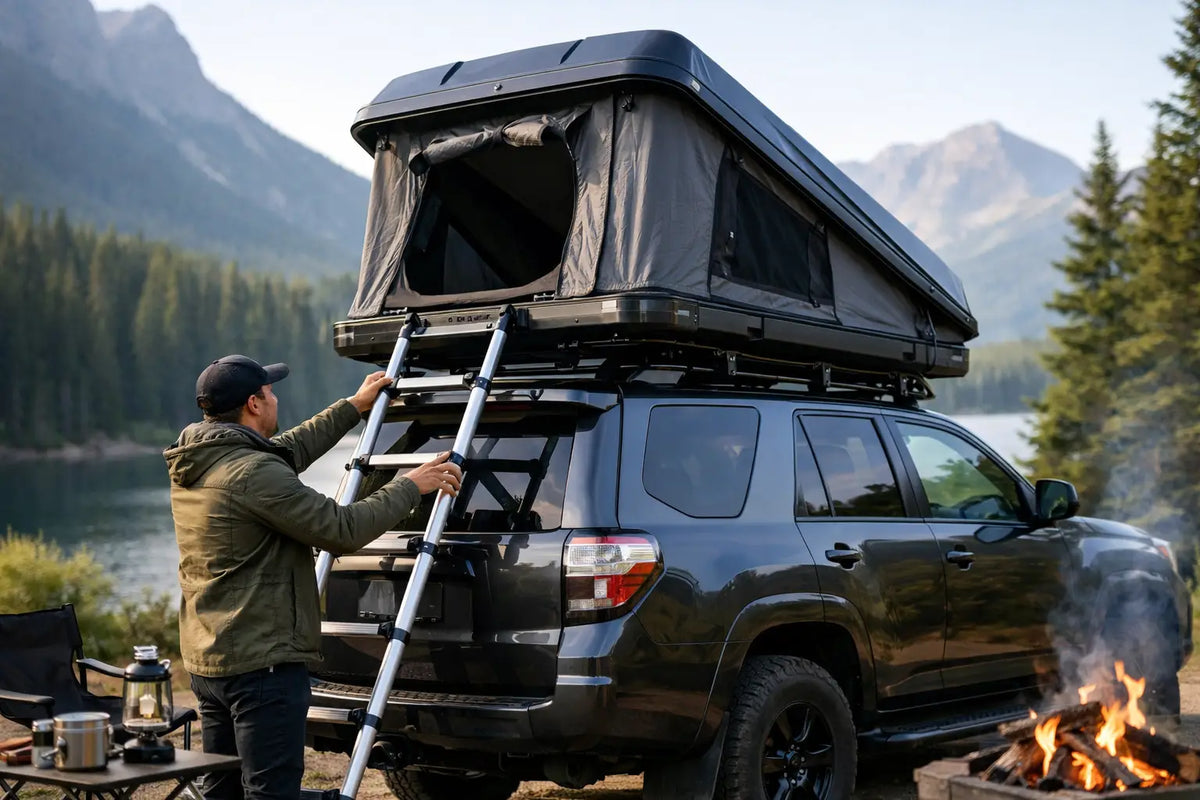
The best hard shell rooftop tent setup begins before you leave the city. It is the difference between arriving at a rainy Northumberland pitch and being asleep in minutes, or spending the last of the daylight hunting for a socket, a spanner and the right mounting bracket.
A hard shell tent is built for the second kind of escape: less faff, more fresh air. But fast deployment only feels effortless when the vehicle, roof bars, bedding and campsite routine are sorted first. Get those foundations right and a Friday-night getaway can feel properly free.
Start with the vehicle, not the tent
Your tent needs a compatible roof rack or roof bars rated for its weight. That means checking more than the headline load figure. Your vehicle manual, roof-bar manufacturer and tent specification should agree on the dynamic roof load: the weight your vehicle can carry while driving.
Static capacity is different. Once parked, the vehicle and rack can usually support far more weight than the dynamic figure, which is why a correctly fitted rooftop tent can safely hold sleeping occupants. Do not assume, though. The rack mounting points, bar spread and tent fixing system all matter.
Measure the bars and confirm that they sit in the positions recommended for the tent. A tent mounted too far forward can affect access to the rear hatch; too far back, and it may overhang awkwardly or put unnecessary strain on the rack. Keep the load centred from side to side, then secure it using the supplied mounting hardware and the stated torque guidance.
After fitting, drive a short local route before committing to a long journey. Listen for unusual wind noise, check that nothing shifts and recheck every fixing. It is also worth measuring the new vehicle height and saving it in your mobile phone. Multi-storey car parks, low branches and height barriers are suddenly part of route planning.
Pack your hard shell rooftop tent for real life
Hard shell tents earn their place because they open with bedding already inside. That does not mean every item belongs in the shell. Overpacking can stop the lid closing cleanly, strain the catches and turn a rapid setup into a wrestle.
Keep the sleeping system simple: a fitted sheet, duvet or sleeping bags, and low-profile pillows that compress easily. On colder UK nights, a wool blanket adds warmth without the bulk of a second oversized duvet. If your tent has an anti-condensation mat, leave it in place. It helps manage moisture beneath the mattress, especially when temperatures drop overnight.
Store loose kit in the vehicle rather than the tent. Your torch, water bottle, charging cable and book can travel in a small bedside bag or organiser, ready to clip in once camp is open. That gives you a calm, usable sleeping space instead of a hard shell packed like a loft cupboard.
Before departure, check the outer shell is fully latched, the cover seals are clear of fabric and the ladder is secured. A quick walk around the vehicle is not glamorous, but it protects the premium parts of the trip: a quiet drive, a dry bed and an easy arrival.
Hard shell rooftop tent setup at the campsite
Choose the pitch with the tent in mind. The ground does not need to be perfectly level, but the vehicle does. Sleeping with your head significantly lower than your feet is a fast way to make a good mattress feel less comfortable. Use a small spirit level, a levelling app or simply take a moment inside the car before opening the tent.
Avoid pitching directly beneath dead branches, on soft ground that could shift in heavy rain, or where the wind funnels between buildings, trees or hillsides. In exposed weather, park the vehicle so the hard shell presents its most aerodynamic side to the prevailing wind where possible. This reduces buffeting and makes the ladder side more pleasant to use.
Once the handbrake is on and the vehicle is in gear or park, open the shell according to its design. Gas struts will do much of the lifting on a pop-up model; fold-out hard shells may require the ladder to support the extended platform. Let the mechanism work at its own pace. Forcing hinges, pulling on fabric or rushing a partially trapped corner is how quick setup becomes avoidable wear.
Check that the tent fabric is fully clear of the shell before closing or tensioning anything. Then fit and lock the ladder. It should sit firmly on the ground at a comfortable angle, not almost vertical and not stretched too far out. Adjust its length so each section is properly engaged and the feet sit on solid ground.
Build a weather-ready entrance
The ladder is more than access. It is your first line of defence against bringing half the campsite into bed. Place a mat or boot tray at its base, leave muddy footwear below, and keep a head torch within reach of the entrance.
If you are using an awning or tent extension, set it up after the rooftop tent is stable. It creates a sheltered changing area, somewhere to sit out a shower and valuable space for bags that would otherwise clutter the car. In dry, still weather, you may not need it. On a wet bank holiday, it can transform the whole camp.
Make comfort part of the setup
Elevation changes camping. You are away from ground damp, uneven turf and the small creatures that make traditional tenting less relaxing. Still, comfort depends on airflow and a thoughtful sleep routine.
Open the appropriate windows or vents, even when it is cool. Two people breathing in a compact tent create condensation quickly, and shutting every panel tight often leaves the inside damp by morning. In rain, use sheltered vents and position openings away from the weather rather than sealing the tent completely.
Keep one warm layer close to hand. UK weather can turn after dark, even following a bright afternoon. A lightweight insulated jacket, dry socks and a beanie take up little room but make the walk down the ladder at 2am much less dramatic.
For couples, agree on the night-time layout before lights out. Put the torch on one side, water on the other, and keep the zip pulls easy to reach. Families should practise ladder rules before the first trip: one person at a time, shoes off before climbing, and no bouncing near the entrance. These small habits make the tent feel less like equipment and more like your room for the weekend.
Know when conditions call for a different plan
A hard shell rooftop tent is designed for all-weather travel, not reckless decisions. Strong winds, severe weather warnings or an exposed coastal pitch may call for moving site, changing orientation or choosing a more sheltered overnight stop. The same applies if the ground is too uneven to set the ladder securely.
Do not use the tent with damaged roof bars, loose fixings, cracked ladder components or fabric caught in the shell. If a mechanism feels wrong, stop and inspect it in daylight. The confidence of rooftop camping comes from knowing your system is sound, not from pushing through a problem because you are already at the campsite.
At camp, do not leave the vehicle unlocked simply because your sleeping area is above it. Keep keys, valuables and a fully charged mobile phone accessible. If you are wild camping, be respectful of access, landowners and local restrictions. A quieter arrival and departure protects the places that make spontaneous nights away possible.
Close down without slowing down
The morning pack-down sets up the next escape. Shake out loose debris, wipe away heavy moisture where practical and let the tent air for a few minutes if conditions allow. Fold bedding flat rather than stuffing it towards the hinges, then check fabric is tucked in evenly before lowering the shell.
Walk around the vehicle once the tent is closed. Confirm every latch is secure, the ladder is stowed and no straps are loose. If you have packed down in persistent rain, open the tent to dry properly when you get home. This is simple maintenance, but it preserves the fabric, mattress and fresh feeling you bought the tent for.
Urban Caveman is built around a better kind of departure: leave work, load the car, and trade the streetlights for a view worth waking up to. Set your system up well once, then let every future camp begin with the satisfying click of a shell opening and the evening still ahead of you.
Share:
Rooftop Tent Insurance in UK: What to Check
Rooftop Tent Mattress Comfort That Goes Further