

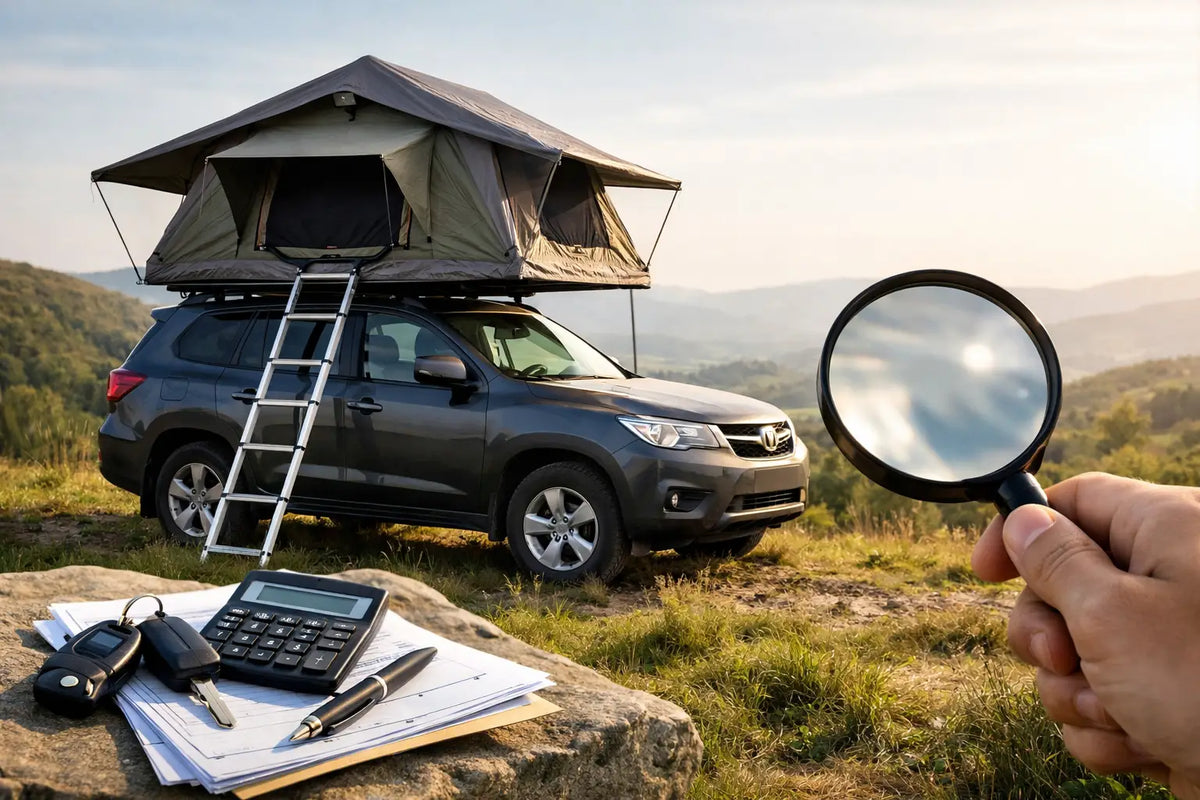
A rooftop tent changes what a Friday evening can look like. Leave the city, park up somewhere worth waking up in, and be asleep above the ground in minutes. But before the first road trip, there is one practical question worth settling: does your insurance protect the tent sitting on your roof?
Rooftop tent insurance in the UK is not always a separate policy. In many cases, cover comes through your motor insurer, specialist camping or leisure vehicle insurance, or a personal possessions policy. The catch is that every insurer defines accessories, modifications, theft and accidental damage differently. Assuming your tent is covered because it is attached to the car can leave an expensive gap.
Is a rooftop tent covered by car insurance?
It depends on the policy and on how the tent is fitted. Some motor insurers may treat a rooftop tent as a vehicle accessory, particularly when it is permanently or semi-permanently mounted to roof bars. Others may class it as a modification or a high-value personal item that must be declared before it is covered.
That distinction matters. A standard comprehensive policy may repair your vehicle after an accident, yet exclude the tent, roof bars and awning if they were not listed. Equally, a policy that covers accessories could apply a low single-item limit that falls short of replacing a premium rooftop tent.
Do not rely on the word “comprehensive”. It describes the broad level of vehicle cover, not a guarantee that every item on or inside your car is insured. Ask the insurer directly whether your rooftop tent is covered for theft, accidental damage, fire, storm damage and collisions while fitted to the vehicle. Ask them to confirm the answer in writing.
Rooftop tent insurance in UK: what insurers need to know
An insurer will usually want the make and model of the tent, its replacement value, how it is fitted and whether it stays on the vehicle year-round. Give the full value of the setup, not just the tent shell. Roof bars, mounting brackets, annex rooms, awnings, ladders and other fitted accessories can quickly add up.
You may also be asked whether the tent changes the vehicle’s height, weight or handling. This is not paperwork for paperwork’s sake. A rooftop tent alters the profile of the vehicle and can affect parking, ferry bookings, low bridges and stability in strong crosswinds. Insurers want to know that the vehicle remains roadworthy and that the manufacturer’s roof-load limits are being followed.
If you have changed cars, check again. A tent that was suitable and insured on one vehicle may not be automatically covered on the next. Static and dynamic roof-load ratings vary, as do insurer rules around modifications.
The difference between fitted and stored cover
A tent can be exposed in more than one place. It might be locked to your vehicle on a street overnight, open at a campsite, or stored in a garage between trips. Each situation can be treated differently by an insurer.
Motor insurance may be the most relevant option while the tent is fitted to the car. Home contents insurance could potentially help while it is stored at home, but only if the policy covers items kept in a garage, shed or outbuilding and the value sits within its limits. Away-from-home cover may apply to removable camping equipment, although a tent fixed to the roof may be excluded.
The point is simple: check every stage of ownership. Cover for a tent in your locked garage is not the same as cover for a tent on a vehicle parked outside a pub after a long day on the road.
The cover worth checking before you travel
Start with theft. Rooftop tents are substantial, but they are still desirable items and can be targeted when a vehicle is left unattended. Check whether theft is covered from the vehicle, whether forced entry or approved security is required, and whether theft from a driveway is treated differently from theft at a campsite.
Then look at accidental damage. Low car parks, barrier arms, branches and narrow lanes are part of travelling with extra height. A policy may cover collision damage following an accident but exclude gradual wear, poor installation or damage caused by exceeding a stated height restriction. Be honest about how and where you use your vehicle.
Weather is another area where wording matters. A quality tent is built for changing conditions, but exceptionally high winds, falling branches, flooding or storm damage can still turn a good trip into a costly one. Check whether weather damage is included and whether there are exclusions for leaving the tent deployed unattended.
Finally, look at recovery and onward travel. If damage to the tent makes your vehicle unsafe to drive, useful cover may include vehicle recovery or a replacement vehicle. It is not always included, and it may not provide a like-for-like camping solution, but it can make an interrupted trip far less painful.
How to avoid an insurance dispute
The strongest insurance claim starts long before anything goes wrong. Declare the rooftop tent before fitting it, even if you are unsure whether your insurer considers it a modification. A quick call can prevent a far bigger problem later.
Keep your purchase confirmation, installation invoice and clear photographs of the tent fitted to the vehicle. Photograph the roof bars, brackets and security fittings too. If you add an awning or extension later, update the declared value. Replacement costs can rise, and underinsuring the setup may reduce the payout.
Follow the tent and vehicle manufacturers’ guidance on fitting, roof-load limits and regular checks. Secure mounts correctly, inspect bolts after the first journeys and remove the tent if it is not designed to remain fitted through every season. Good maintenance protects the equipment and demonstrates sensible ownership if you ever need to make a claim.
It also pays to think about security in everyday use. Park in well-lit places where possible, use security hardware compatible with your mounting system, and avoid leaving valuable bedding, cooking kit or electronics inside when the vehicle is unattended. Your tent may be covered, but the contents inside it may be subject to separate limits or exclusions.
When specialist cover may make sense
If your rooftop tent is part of a larger overlanding setup, standard car insurance can become restrictive. A vehicle with upgraded suspension, auxiliary power, recovery equipment, an awning and a high-value tent may be better suited to a specialist insurer familiar with camping conversions and leisure use.
Specialist cover is not automatically better or cheaper. It can carry higher premiums, excesses or conditions around where the vehicle is stored. But it may offer clearer protection for declared accessories and more relevant support for the way you actually travel.
For occasional weekend campers, adding the tent to an existing motor policy may be the cleanest route. For regular off-grid trips, longer UK tours or travel abroad, it is worth comparing the full policy wording rather than focusing only on the annual price. The cheapest quote is poor value if it excludes the equipment that makes the trip possible.
Questions to ask your insurer
Before you set off, make sure you can get a clear answer to these points:
- Is my rooftop tent covered while fitted to my vehicle, and do you class it as an accessory or modification?
- What is the maximum payout for the tent, roof bars, brackets and attached accessories?
- Does cover include theft, accidental damage, fire, storms and collision damage?
- Are there security requirements or restrictions on parking overnight, at campsites or on a driveway?
- Is the tent covered when stored off the vehicle, and are its contents covered while travelling?
- Do I need to tell you about any changes to the vehicle’s height, weight or roof-load setup?
A rooftop tent is built to make getting away feel effortless, not uncertain. Get the cover clear, fit the setup properly, and the next plan can stay focused on the good part: somewhere quiet, a better view, and no rush to head home.
Share:
Rooftop Tent Height Restrictions UK Explained
Hard Shell Rooftop Tent Setup for Faster Camps