

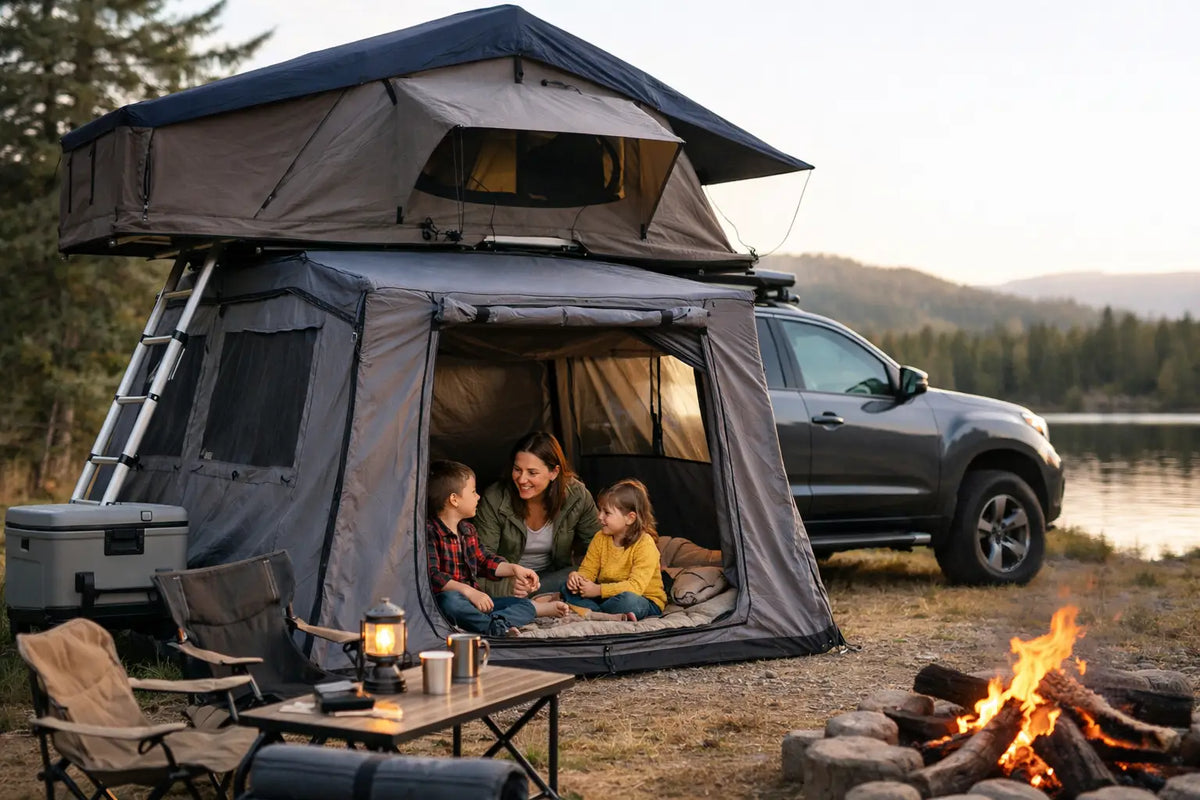
The quickest way to spoil a family campsite is to make everyone live out of the back of the car. Wet coats pile up, shoes disappear under seats, someone needs the loo at midnight, and the space beneath your rooftop tent goes unused. A rooftop tent annex for families changes that. It turns the side of your vehicle into a private ground-level room - somewhere to change, eat, store kit and get out of the weather without retreating to the car.
That extra room is not about carrying more stuff for the sake of it. It is about making weekends away feel less like an endurance test and more like the freedom you set off for. For families travelling from the city to a coastal pitch, forest site or remote corner of the Highlands, an annex creates the breathing room that keeps camp calm.
Why families need more than a rooftop tent
A rooftop tent gives you a fast, elevated place to sleep. It gets bedding off uneven ground, away from mud and clear of the usual campsite chaos. For two people, that may be the whole setup. Add children, a dog, rain jackets and the standard collection of snacks, books, footballs and muddy wellies, and the question becomes less about where everyone sleeps and more about how everyone lives.
An annex answers the daytime problem. It uses the sheltered space beside or below the tent access ladder, creating a room with a floor-level entrance. Children can step inside to get changed after a swim. Adults can sort breakfast without balancing mugs on tailgates. Damp layers stay out of the sleeping area, while clean bedding remains where it belongs - upstairs, dry and ready.
It also gives a family campsite a sense of order. That sounds modest, but it matters after a long drive on a Friday evening. When there is a place for shoes, camp chairs and a changing bag, setup feels purposeful rather than frantic.
What a rooftop tent annex for families actually adds
The best annex is a flexible space, not a glorified storage cover. It should work differently across a two-night break in the Lakes, a wet half-term trip to Wales and a longer European road adventure.
A changing room that protects the sleeping space
Getting children into dry clothes in a cramped vehicle is no one’s idea of a holiday. An enclosed annex gives you standing room and privacy, especially useful when campsites are busy or the weather turns. You can keep towels, waterproofs and spare layers downstairs, then climb into the rooftop tent without bringing half the field with you.
This separation also helps at bedtime. One adult can settle younger children in the tent while another uses the annex to organise tomorrow’s clothes or make a final cup of tea. Small moments of space make a real difference when everyone is tired.
Shelter for the British forecast
UK camping rarely delivers one kind of weather. A bright breakfast can become sideways rain by lunch, followed by a cold evening that has everyone searching for a fleece. An annex will not replace a full family tent or a heated campervan, but it gives you a sheltered buffer between the elements and your sleeping space.
Look for durable, weather-resistant fabric, strong zips and proper attachment points. Ventilation matters too. A sealed room can quickly become stuffy when damp clothing and warm bodies are inside. Windows or mesh panels allow airflow while preserving privacy and keeping insects at bay.
A place for the kit that clutters the car
A family vehicle becomes far more pleasant when it stays a vehicle, not a cupboard on wheels. Store camp chairs, a folding table, shoes, daypacks and outdoor toys in the annex when you arrive. That makes the boot accessible for food, recovery gear and the things you need on the road.
There is a trade-off. An annex is not a secure lock-up, so do not leave valuables inside when you head out. Think of it as your campsite utility room: ideal for bulky, low-risk gear that otherwise creates a mess indoors.
More privacy on shared sites
Many family-friendly campsites are sociable by nature. That can be brilliant, until you need a private space to change a toddler, breastfeed, manage a muddy dog or simply take five minutes out of the wind. An annex makes the site feel more self-contained without cutting you off from it.
For older children, it can become a useful den for card games or rainy-day reading. Keep expectations realistic, though. Fabric walls do not soundproof sibling arguments. They do create a defined space where family life can spread out a little.
Choosing the right annex size and layout
Compatibility comes first. Your annex needs to fit your rooftop tent’s mounting height, entry position and ladder arrangement. Measure your vehicle from the ground to the base of the tent when it is mounted and loaded as you would travel. A tall 4x4 and a lower estate car need different drop lengths, and an ill-fitting annex can leave gaps at ground level or pull awkwardly around the ladder.
Then consider how you camp. A compact annex suits a couple with one young child who mainly need a changing and storage zone. A larger model makes more sense for a family of four spending several nights off-grid, particularly if poor weather is likely. More volume is useful, but it brings more fabric to pack, dry and manage.
Entrance design matters more than it first appears. Wide doors make it easier to carry a sleeping child, bring in a camp chair or move a pushchair-sized load of kit. Multiple access points can be useful when the ladder sits in the centre of the room, allowing people to move around camp without constantly ducking beneath it.
A removable floor is another worthwhile consideration. For dry summer touring, you may prefer the simplicity of groundsheet-free use. On wet grass or dusty pitches, a floor gives children a cleaner space to sit and makes the annex feel more like a proper room. It will need cleaning, of course, but that is better than cleaning the inside of your car.
Set up for speed, not for campsite theatre
Family camping works best when everyone knows the rhythm. Park level, deploy the rooftop tent, secure the annex, then assign the first jobs: shoes in one corner, kitchen box by the door, wet gear away from bedding. With a well-designed setup, this should take minutes rather than consume the first hour of your break.
Practise at home before the first trip. It is not glamorous, but it lets you understand the zip sequence, attachment straps and peg points without wind, rain or hungry children adding pressure. Check that the ladder is stable, that doorways sit where you expect and that the annex fabric is tensioned enough to shed rain rather than collect it.
When conditions are breezy, use the supplied guy lines and pegs. An annex is a large fabric surface, and treating it casually can lead to flapping, noise and unnecessary strain on the connection points. On hardstanding, bring suitable weights or anchoring options where campsite rules allow.
When an annex is not the right answer
An annex earns its place when you stay put long enough to use it. If your family is moving every morning on a fast-paced road trip, or only stopping overnight at a simple site, the extra setup may not be worth it. A compact awning or tailgate shelter could provide enough cover with less effort.
It is also worth being honest about sleeping arrangements. An annex can create a ground-level bedroom for older children with suitable sleeping mats, but it is not automatically the safest or warmest solution for every age group or location. Younger children may be better upstairs with an adult, depending on your tent size, weather and family routine. Always follow the tent and annex manufacturer’s guidance on capacity and use.
For many families, the strongest setup is a rooftop tent as the dry, comfortable sleeping base and an annex as the adaptable living space below. It keeps the vehicle ready to move, gives camp a clear layout and removes much of the friction that makes outdoor trips feel hard work.
Urban life is full of rooms with a purpose. The car carries you there. The rooftop tent lets you sleep above the ground. Add an annex, and the space between becomes somewhere your family can actually live. Choose one that fits your vehicle, your tent and the way you travel, then let the weather do its worst. You will still have somewhere to put the wellies.
Share:
Rooftop Tent Mattress Comfort That Goes Further
How to Choose a Car Awning for Rainy Trips