

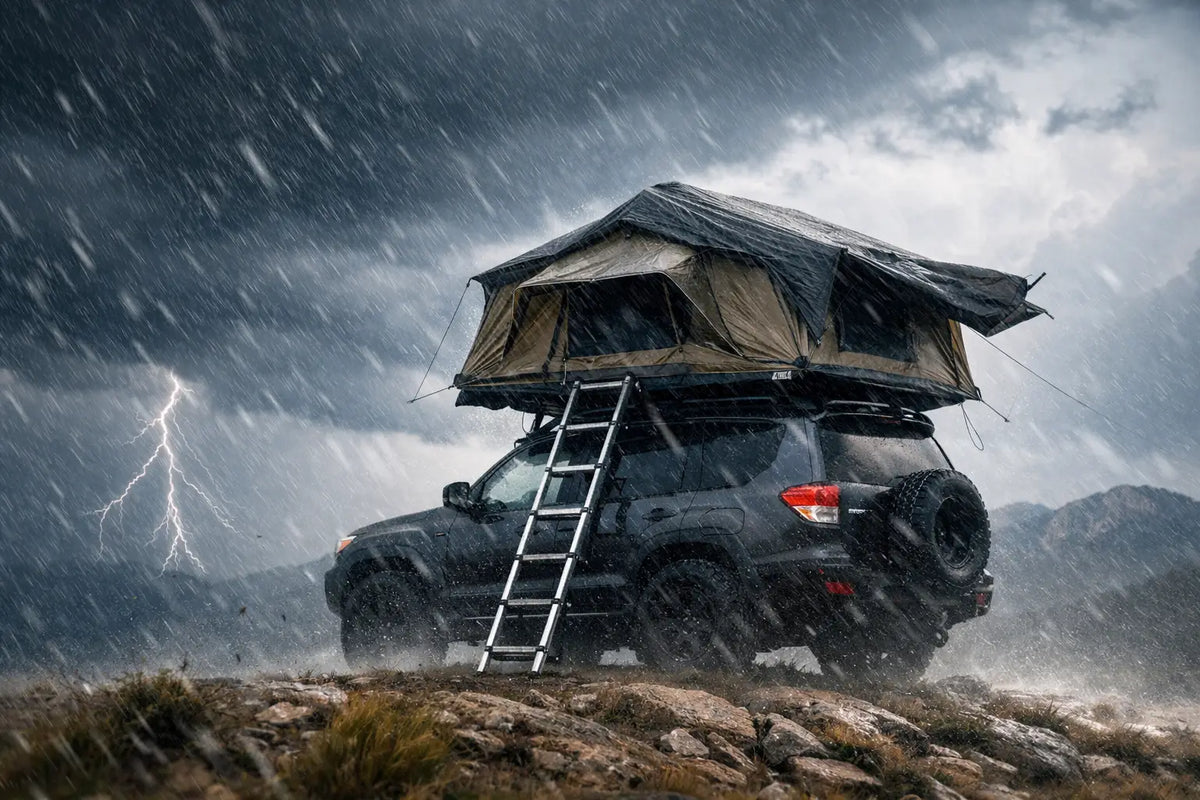
A quiet pitch can turn sharp fast when a weather front arrives after dinner. Rooftop tent wind resistance is not about proving how much punishment your kit can take. It is about choosing the right campsite, setting up with care and knowing when a comfortable night outside is no longer the smart call.
A quality rooftop tent gives you a dry, elevated place to sleep and gets you away from sodden ground. But it also sits higher than a ground tent, where it catches more moving air. Treat wind as part of the planning, not an unwelcome surprise, and you can keep spontaneous escapes feeling exactly as they should: effortless, comfortable and confidently yours.
What rooftop tent wind resistance really means
Wind resistance is more than the strength of the fabric. Your experience depends on the whole setup: the vehicle, roof bars or rack, tent shell, mounting hardware, ladder, awning, site exposure and the direction of the gusts.
A hard-shell rooftop tent usually presents a cleaner profile than a large soft-shell design once open, but neither is immune to wind. Fabric panels can flex, rainflies can flap and an extended ladder or annex can add moving surfaces. The tent may be perfectly sound while the noise and motion make sleep unpleasant.
There is also a crucial distinction between wind while parked and wind while driving. Never drive with a rooftop tent open. When closed, follow the tent manufacturer’s guidance on maximum driving speed, load limits and fitting requirements. Your vehicle roof and roof bars have their own dynamic load ratings, and those figures matter every bit as much as the tent itself.
The campsite does most of the work
The best defence against wind starts before the tent opens. A beautiful ridge line, exposed headland or empty field may look ideal at golden hour, but it can become a hard place to sleep once gusts build. The same tent will feel dramatically more settled in a sheltered position.
Look for natural cover from a bank, hedge, woodland edge or larger landform. Do not camp directly beneath unstable branches, and avoid dry or dead trees in high winds. Shelter should reduce the force of the wind without introducing a falling-branch risk.
Orientation matters too. Park with the smallest practical end of the tent facing the prevailing wind where possible. If your tent opens to one side, avoid presenting its broadest fabric wall directly into the gusts. A small adjustment in parking angle can reduce flapping, ladder movement and the feeling that the whole camp is working against you.
Do not rely on a picturesque spot beside the sea or on an open moor simply because it is calm when you arrive. Coastal and upland weather changes quickly. Check the hourly forecast, gust speeds and any weather warnings before leaving, then check again before setting up. A forecast for moderate wind can still include stronger gusts, particularly overnight and on exposed ground.
Set up for stability, not just speed
Fast setup is one of the great freedoms of vehicle camping. It should not mean rushed setup. Once the tent is open, take a minute to make every connection deliberate.
Start on level, firm ground. Engage the handbrake, select park or first gear as appropriate, and use wheel chocks if the surface or slope calls for them. A stable vehicle is the foundation of a stable sleeping platform. Avoid soft verges and ground that may turn to mud after rain.
Check that all mounting brackets are properly tightened before each trip and periodically throughout the season. The tent should sit squarely on compatible roof bars or a rated rack, with no movement at the mounts. If anything shifts, rattles or appears damaged, stop and inspect it before continuing.
Set the ladder to the correct length and angle as specified for your tent. It is not merely a way in and out. On many designs, it supports part of the tent’s weight. Make sure its feet are on solid ground rather than loose gravel, wet grass or a plastic levelling ramp that could slide.
Close and secure windows, vents and rainfly panels on the windward side if conditions demand it, while retaining safe ventilation where possible. Condensation is more likely in a sealed-up tent, so balance airflow against the weather rather than shutting everything tight by default.
If your model includes guy points, use them. Stake them into appropriate ground with the correct pegs, tensioning evenly rather than pulling one corner hard. On hardstanding where pegs are not possible, do not improvise with loose objects that could become hazards. Choose another pitch or reduce the amount of fabric you have deployed.
Awnings and annexes change the equation
An awning gives a wet British campsite more living space. In wind, it also becomes a sail. The larger the covered area, the more carefully you need to judge the conditions.
Secure awnings with suitable guy lines and pegs from the outset, even if the air is still. Use the supplied straps and keep tension checked as the ground softens or weather changes. If gusts rise, retract the awning before it bends, tears or transfers strain to the vehicle.
Annexes and tent extensions are brilliant for families, changing clothes and keeping kit out of the rain, but they add fabric and connection points. In breezy weather, fit only what you genuinely need. There is no prize for building the full campsite when a compact sleeping setup will be quieter, safer and far easier to pack away in the morning.
Know when wind has crossed the line
There is no universal wind speed that makes every rooftop tent unsafe. Tent design, vehicle height, terrain, gust direction, local exposure and your experience all change the answer. Manufacturer instructions are the first authority for your specific setup.
What matters on site is the trend. A steady breeze that barely moves the fabric is very different from repeated gusts that snap guy lines tight, shake the ladder or make the vehicle rock. If the forecast is worsening, make your decision early while packing is straightforward.
Watch for these signs that it is time to scale back or move on:
- Guy lines repeatedly slacken or strain despite proper tensioning.
- The ladder shifts, sinks or cannot be placed securely.
- Awning poles bend, fabric snaps loudly or water begins pooling overhead.
- Nearby branches are moving heavily, debris is travelling through the air or a weather warning is in force.
Pack the right mindset with the right kit
Wind preparation does not require turning every weekend away into an expedition briefing. It does mean carrying the basics: suitable pegs for the ground you expect, spare guy line, a mallet, wheel chocks, a small torch and weatherproof layers for packing down. Keep the tent’s fitting tools accessible too, rather than buried beneath cooking gear.
Before a longer trip, practise opening and closing your rooftop tent in calm conditions. Learn where every strap goes, how the ladder locks, how the rainfly tensions and how quickly you can retract an awning. Familiarity turns a blustery arrival into a simple sequence rather than a campsite scramble.
Urban Caveman kit is built for life beyond the city, but confidence in the outdoors comes from using capable equipment with clear judgement. The aim is not to battle the weather. It is to create a dry, comfortable base from which you can enjoy it.
When the forecast looks lively, choose shelter over scenery, secure the small details and keep your camp compact. The wild will still be there in the morning, and a settled night makes the view far better.
Share:
Roof Tent Weight Limit: Static vs Dynamic Loads Explained for 2026
Rooftop Tent Effect on Fuel Economy Explained