

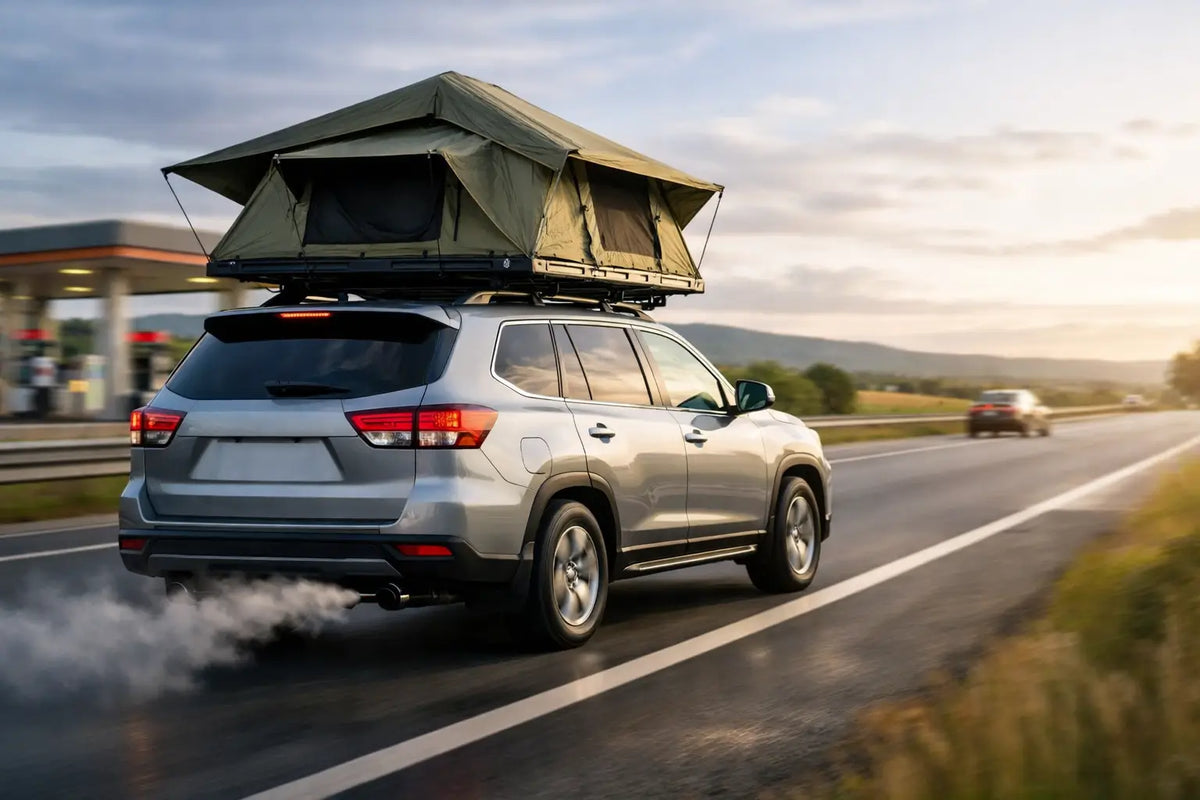
A rooftop tent changes the shape of your vehicle before it changes your weekend. That is the real rooftop tent effect on fuel economy: more wind resistance, more fuel used at speed, and a trade-off between effortless camping and efficiency on the road. It is a worthwhile trade-off for many drivers - provided you choose well, pack smart and know what to expect.
A ground tent might save a little at the pump, but it can cost you time, comfort and flexibility when the rain arrives at 8pm. A well-designed rooftop setup turns a lay-by view, a coastal pitch or a last-minute escape beyond the city into a proper place to sleep. The aim is not to pretend there is no fuel penalty. It is to make every mile, and every stop, work harder for your adventure.
Why rooftop tents use more fuel
At town speeds, the difference can be modest. On a motorway, air becomes the main event. Your vehicle is built to push air smoothly over its bonnet, windscreen and roofline. Add a tent, roof bars and possibly an awning, and that clean airflow is disrupted. The engine needs more energy to maintain the same speed.
Aerodynamic drag rises sharply as speed increases. That means a rooftop tent is far more noticeable on a 70mph motorway run than on the final winding miles to a campsite. Weight does play a part, particularly under acceleration, on steep climbs and when the car is fully loaded. But for most vehicles, the tent's frontal area and shape are the bigger reasons for increased fuel use.
The fuel economy impact is not a fixed number. A compact, low-profile hard-shell tent on a suitable SUV may have a very different effect from a large soft-shell model fitted high above a tall 4x4. A headwind on the M6, a roof box, four passengers, muddy recovery gear and an enthusiastic right foot will all move the result in the wrong direction.
How much does a rooftop tent affect fuel economy?
Expect a measurable reduction, especially on faster journeys. Many drivers see fuel consumption rise by roughly 10 to 30 per cent, but that range is a practical rule of thumb, not a promise. Some streamlined hard-shell tents on lower vehicles may sit towards the lower end in favourable conditions. Larger tents, taller vehicles and regular motorway cruising can push the figure higher.
Think in pounds as well as miles per gallon. If your vehicle normally returns 40mpg on a long run, a 15 per cent reduction brings it closer to 34mpg. On a 300-mile return trip, the extra fuel may be noticeable. Yet that same tent can remove the need to book accommodation, let you stay closer to the trailhead and make a two-night break feel far bigger than the distance travelled.
Electric vehicles follow the same aerodynamic rule, although the consequence appears as reduced range rather than extra litres at the forecourt. An EV carrying a rooftop tent can lose a meaningful portion of motorway range, so charging stops deserve more planning. Slower roads, a lower cruising speed and a tent that sits low on the roof can make a substantial difference.
The factors that make the biggest difference
Tent profile and mounting height
Low, compact hard-shell tents generally create less drag than tall, bulky setups. The key word is generally. The exact shape of the shell, where it meets the windscreen line and the airflow around its edges all matter.
Mounting height matters too. Roof bars that hold the tent close to the vehicle can reduce the exposed frontal area compared with a high rack system. That does not mean chasing the lowest possible fit at the expense of safe mounting, roof clearance or access. Follow your vehicle and rack load limits, and make sure the tent is secured exactly as specified.
Vehicle shape
A tent on a low estate car, crossover or SUV often sits in cleaner air than the same tent on a boxy, lifted 4x4. Taller vehicles already meet more air, and a tent extends that leading edge further. There is no bad choice here - a capable 4x4 may be the right tool for remote tracks and poor weather - but it is worth matching your tent to the journeys you actually take.
Speed, wind and road conditions
The fastest fuel-saving upgrade is usually a calmer cruising speed. Dropping from 70mph to 60 or 65mph can make a surprising difference with a tent on the roof, while also reducing wind noise and making the journey feel less relentless. It is particularly useful when travelling into a strong headwind or across exposed routes.
Tyre pressures matter as well. Check them when cold and set them for the vehicle's loaded condition, according to the manufacturer's guidance. Underinflated tyres add rolling resistance, while overinflating them for economy can compromise grip, comfort and tyre wear. On wet UK roads, that is a false economy.
Everything else on the roof
A rooftop tent is rarely alone. Awning brackets, jerry cans, traction boards, spare wheels and oversized roof boxes can all add drag or weight. Some are essential for a serious expedition. Some are simply along for every journey because nobody has taken them off since last summer.
Carry what supports the trip in front of you. If you are heading for a long weekend at a serviced campsite, you may not need the same equipment as a week in the Highlands. Keeping the roofline clean is one of the simplest ways to protect fuel economy without sacrificing comfort at camp.
Reducing the fuel penalty without reducing the adventure
Start with the tent itself. Choose a model sized for your vehicle, your sleeping arrangement and your typical travel style - not the biggest footprint you can fit on the roof. A compact, refined profile is easier to live with on weekday roads and more efficient over long distances. For couples and solo travellers, that can be the sweet spot.
Before leaving, check that the cover or shell is fully closed, all straps are tucked away and no fabric is exposed. A loose strap can create persistent noise and extra turbulence. It can also wear through over time. Take a minute at the first fuel stop to inspect the setup again, particularly after a motorway section.
Pack dense, heavy items low in the vehicle, close to the centre where possible. This will not erase aerodynamic drag, but it improves handling and helps keep the roof load within sensible limits. Avoid treating the tent as an excuse to overpack. The beauty of vehicle camping is access to comfort, not hauling every comfort you own.
Plan routes with the whole journey in mind. A slightly longer route with fewer stop-start sections may use less fuel than a shorter one through congestion, but the answer depends on terrain and traffic. For an EV, use range estimates that account for the tent, weather and elevation rather than the optimistic number shown after a city commute.
Finally, remove the tent when a long stretch of ordinary driving is ahead. If your tent is designed for rapid fitting and removal, taking it off between adventures can restore your everyday economy and reduce wind noise. For drivers who escape most weekends, keeping it mounted may be worth the small ongoing cost. For occasional campers, seasonal fitting is often the more efficient choice.
Is a rooftop tent still worth it?
For the right traveller, absolutely. Fuel economy is one part of the ownership picture, not the whole story. A rooftop tent gives you a dry, elevated sleeping space, a mattress that is ready when you arrive, and a faster route from parked to settled. That matters when daylight is fading, the ground is soaked or you have driven for hours to reach a place worth waking up in.
There are trade-offs beyond fuel, too. You need to consider dynamic roof-load limits, vehicle handling, total height at car parks and whether your normal parking space allows the extra clearance. You may also hear more wind noise. Good equipment, correct fitting and deliberate driving reduce these compromises, but they do not make them disappear.
Urban Caveman builds for that balance: durable comfort when the road ends, with a clean, considered form for the roads that get you there. Choose the setup that suits your vehicle and your real weekends, then drive it with purpose. The best trips are not measured by the last decimal place on the fuel receipt, but by how easily you can leave the city behind when the forecast looks good.
Share:
Rooftop Tent Wind Resistance in Real Weather
Rooftop Tent Height Restrictions UK Explained