

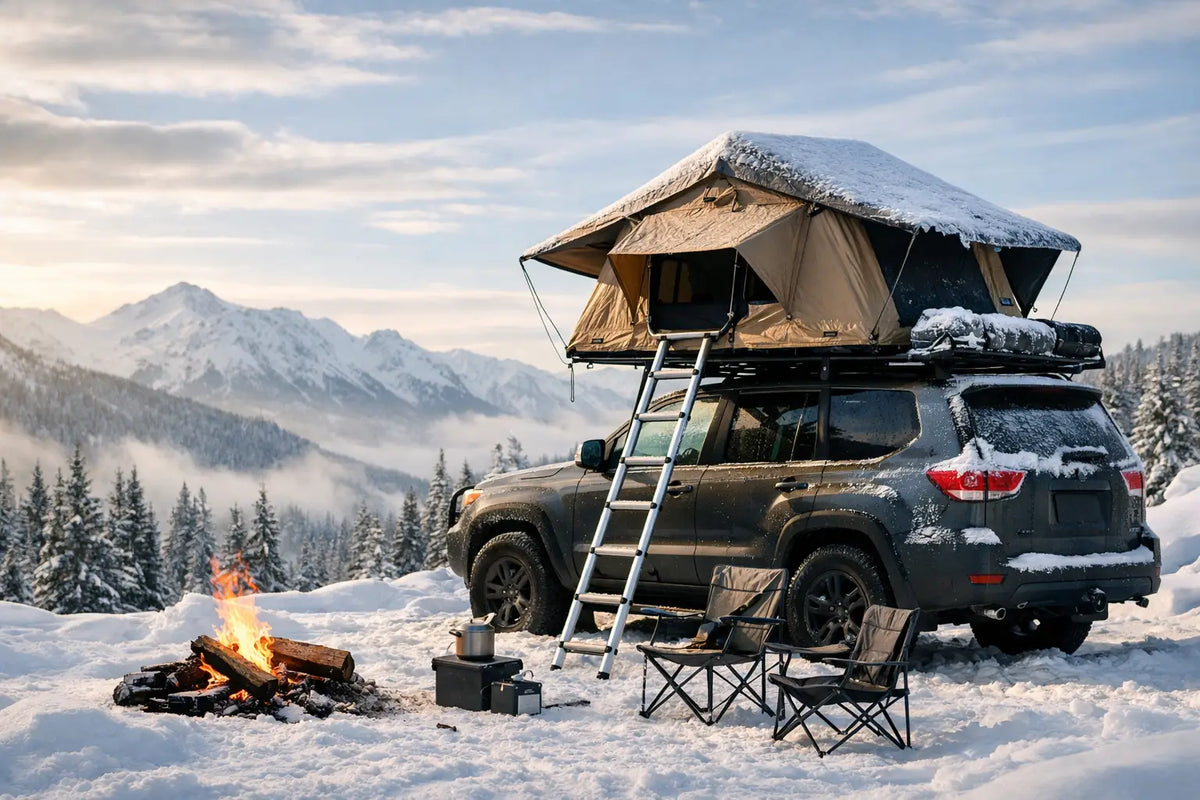
A frost-covered windscreen, an empty lay-by near the trailhead, and a hot coffee before the rest of the world wakes up. That is winter travel done properly. The best rooftop tent winter camping tips are not about proving how tough you are. They are about building a sleep system, choosing a pitch and planning your vehicle so cold weather feels like part of the experience, not a battle against it.
A rooftop tent gives you a fast, elevated place to sleep, away from wet ground and muddy campsites. But elevation also puts you closer to moving air. Get the details right and you can travel beyond the city with a genuinely comfortable basecamp, even when the forecast turns sharp.
Start with the right winter pitch
Winter comfort begins before the tent comes out of its cover. Look for a sheltered, level pitch with natural protection from prevailing wind, but avoid parking directly beneath branches that may shed snow, ice or deadwood. A woodland edge can be calmer than an exposed ridge, while a low hollow may collect colder air and morning fog.
Think about the direction of your vehicle, too. Point the tent entrance away from the wind where possible, and give yourself room to use the ladder safely. Frozen grass, wet leaves and mud become slippery quickly after dark. A stable, level vehicle keeps your mattress comfortable and reduces the chance of a restless night spent sliding towards one side.
Do not mistake a quiet spot for a suitable one. Check local access rules, campsite opening dates and ground conditions before setting off. In the UK, saturated ground can become rutted in minutes. If your vehicle is unlikely to get out without churning up the pitch, choose firmer ground or move on. A good escape leaves no damage behind.
Insulate the bed, not just the tent
A quality rooftop tent fabric blocks weather, but warmth comes from layers that manage heat loss underneath you as well as above you. Your body compresses a sleeping bag or duvet beneath it, reducing the insulation that matters most on a cold night.
Start with the tent mattress, then add a properly fitted insulating layer if your setup allows. A closed-cell foam mat, thermal underlay or insulated sleeping mat can make a noticeable difference by slowing heat transfer through the floor. The best choice depends on the internal space of your tent and how quickly you want to pack away in the morning. Bulky layers may be warmer, but they can make closure awkward.
For bedding, choose a sleeping bag rated for temperatures lower than the forecasted overnight low, or use a duvet system with an extra blanket. Temperature ratings vary by person. If you sleep cold, had a long wet walk or are camping after a few hours of driving, build in a margin rather than trusting the most optimistic number on the label.
Dry sleepwear is non-negotiable. Change out of damp socks and base layers before bed, even if they do not feel soaked. Merino or synthetic thermal layers work well, paired with warm socks and a beanie if needed. Avoid climbing in wearing the clothes you cooked, walked and sweated in. That moisture has nowhere useful to go.
Manage condensation without letting the cold in
The winter camping paradox is simple: seal every vent and you may feel warmer for an hour, then wake to damp fabric, clammy bedding and condensation dripping from the roof. Warm breath meets cold tent fabric and turns into moisture. Two people can create a surprising amount overnight.
Keep a small amount of ventilation open, ideally at opposite points of the tent to encourage gentle airflow. Many rooftop tents have mesh panels or adjustable vents that let you fine-tune this without exposing the sleeping area to rain. The aim is not a draught. It is a controlled route for moist air to leave.
Keep wet boots, waterproofs and towels out of the sleeping compartment when possible. Store them in a sheltered vehicle space, an awning room or a sealed bag. If they must come into the tent, keep them near a ventilated entrance and away from bedding. In the morning, wipe down any internal condensation with a microfibre cloth before packing up. It takes two minutes and protects your gear over the long run.
Build a safer heat plan
Your first line of warmth should always be insulation, dry clothing and good bedding. Heating is a supplement, not a substitute for a proper sleep system.
Never use a fuel-burning stove, barbecue, fire pit or portable combustion heater inside a rooftop tent. Carbon monoxide is colourless, odourless and potentially fatal. An open flame also creates a serious fire risk around fabric, bedding and vehicle-mounted equipment.
A hot water bottle, filled carefully and secured with a cover, is simple and effective. Put it near your feet before bed, then make sure the cap is tightly closed. If you use a vehicle-mounted or externally vented heating solution, follow the manufacturer instructions precisely, keep exhaust outlets clear of snow and never route exhaust into the tent or awning. A carbon monoxide alarm is sensible for enclosed vehicle sleeping spaces and any sheltered cooking area, but it does not make unsafe heating methods safe.
Keep morning easy, even below zero
Cold-weather camping gets better when you remove friction from the first ten minutes of the day. Put tomorrow's clothes in a dry bag inside the tent so they are not icy from the car. Keep a head torch, water, keys and a warm mid-layer within reach. Nobody wants to climb down a ladder in the dark to find a missing glove.
Water management deserves more thought in winter. A full bottle can freeze overnight, particularly if left in the vehicle. Bring an insulated flask for hot drinks and keep a drinking bottle inside the tent or wrapped in an insulating sleeve. Do not rely on melting snow for all your water unless you have a safe way to treat it and plenty of fuel. Snow yields less water than it appears to.
Plan breakfast around speed. A flask of hot water prepared the previous evening, easy oats or a simple stove meal can get you moving before the cold settles into your hands. If you are cooking under an awning, maintain ventilation and keep flame sources well away from tent fabric, sidewalls and fuel.
Respect wind, snow and the vehicle beneath you
A rooftop tent is only as capable as the vehicle and roof system carrying it. Before a winter trip, confirm that your vehicle roof, roof bars or rack and tent are compatible with the load. Dynamic roof load matters while driving; static load matters when parked with people in the tent. They are not the same figure, and both deserve attention.
Inspect mounts, bolts, ladder fittings and fabric before departure. Winter roads bring salt, grit and spray, while temperature changes can reveal worn seals and loose hardware. Clear snow from the tent roof before opening or closing it, and do not allow heavy accumulation to build up while you sleep. Snow load, wind direction and the specific tent design all affect what is sensible, so follow the tent manufacturer guidance rather than guessing.
Wind is often the deciding factor. A calm -2°C night can feel far more comfortable than a wet, gusting 6°C one. If strong winds are forecast, choose a protected campsite, adjust the vehicle orientation, use appropriate guy lines where the tent design supports them, or reconsider the night altogether. Confidence outdoors means knowing when a plan needs to change.
Pack for the moments between comfort
The tent handles sleep. The small pieces of kit handle everything around it. A waterproof ground mat at the ladder keeps socks out of mud. A compact brush clears ice and grit from footwear before you climb up. A spare dry bag protects bedding if conditions turn foul during pack-down.
Carry traction aids suited to your vehicle and route, plus a charged mobile phone, offline mapping and enough power to avoid depending on the vehicle battery for every device. In colder weather, batteries lose performance and recovery can take longer. Tell someone where you are going, especially if you are heading beyond well-used campsites.
Urban Caveman winter travel is not about suffering through the season. It is about leaving when the roads are quiet, the views are cleaner and a well-built camp feels like your own private room above the weather. Pack dry, pitch smart and leave room for the simple luxury of waking up warm.
Share:
How to Set Up a Roof Tent: A Guide to Rooftop Exploration
Roof Tent Weight Limit: Static vs Dynamic Loads Explained for 2026