

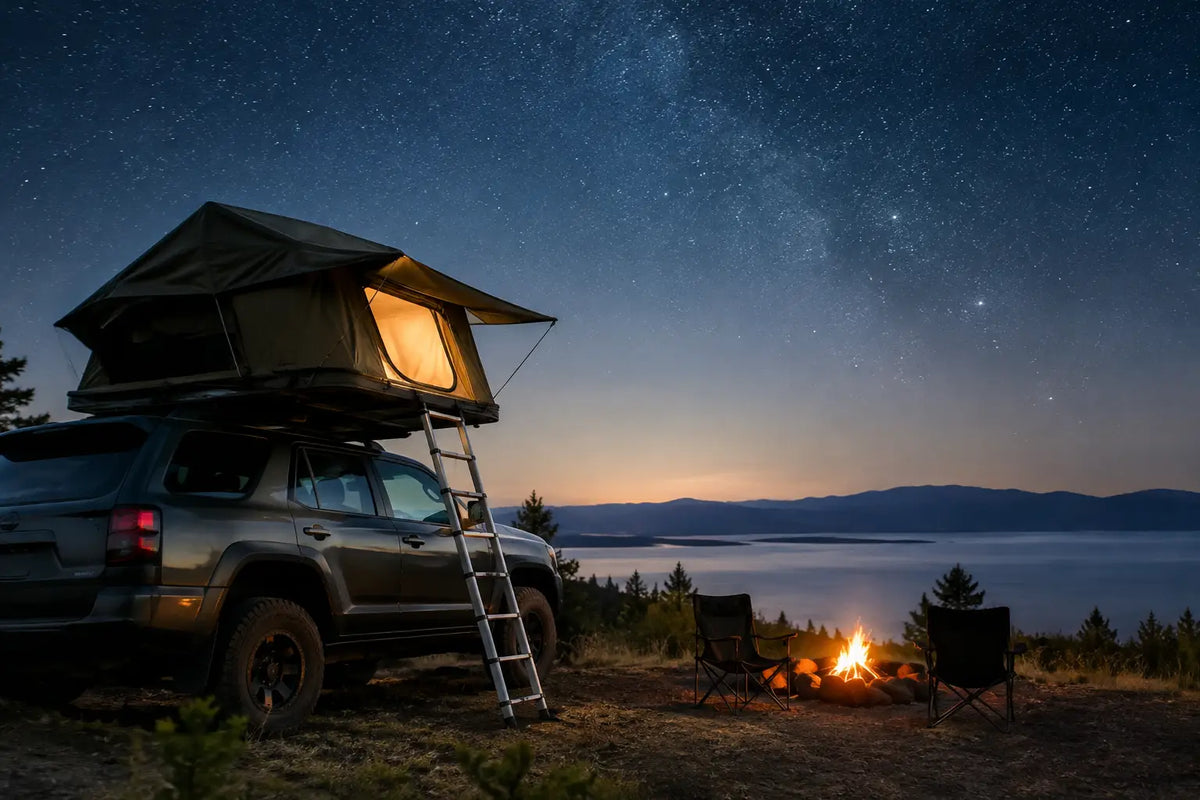
A quiet lay-by above the valley. Rain on the roof. No tent poles, no cold ground, no 20-minute wrestle with a flysheet. But are roof tents noisy when the weather turns or the wind gets up?
The honest answer is: sometimes, but usually not in the way people expect. A well-made, correctly fitted rooftop tent is typically calm and comfortable on a still night. In gusty coastal weather, exposed hillsides or heavy rain, you will hear the elements - just as you would in any fabric shelter. The difference is that a few smart choices, from where you park to how you tension the tent, can make a dramatic difference.
A rooftop tent is not designed to turn the outdoors silent. It is designed to make time outdoors more comfortable, faster to access and easier to enjoy. That includes knowing what creates noise and how to keep it in check.
Are roof tents noisy in wind?
Wind is the biggest variable. Roof tents sit above the vehicle, where they are naturally more exposed than a ground tent tucked behind a hedge or low wall. Strong gusts can move fabric panels, brush tree branches against the shell, and create a low vibration through an awning or open window.
That does not mean every breezy night becomes a noisy one. Quality tent fabric, a stable frame and properly positioned guy lines all reduce movement. The key is to pitch with intent. Park with the vehicle’s nose into the prevailing wind where possible, then keep the smallest profile facing the gusts. If your tent has an entrance canopy or awning, make sure it is secured rather than left loose to flap.
Campsite selection matters just as much as product design. A sheltered woodland edge, a dip behind a bank or the lee side of a building can feel entirely different from an exposed ridge. The view may be better on the summit. Your sleep will often be better 100 metres lower.
What noises should you actually expect?
Most rooftop-tent sounds are familiar camping sounds, only a little closer to ear level. Light rain makes a soft, steady patter on the rainfly. Wind may create an occasional rustle in the fabric. In heavier weather, zips, guy lines and window panels can move if they have not been secured.
There is also the vehicle itself. A car can creak slightly as people climb the ladder, shift their weight or turn over in bed. This is normally more noticeable during setup than when everyone is settled. A correctly mounted tent on suitable roof bars should feel solid, not loose or rattly.
The sleeping platform can transmit a small amount of movement between two people, particularly in compact tents. That is not unique to rooftop camping, but it is worth considering if one person is a particularly restless sleeper. A well-supported base, a proper mattress and sensible load distribution make the experience feel far more settled.
Wildlife and other campers are often louder than the tent. Dawn birds, sheep in the next field, a late-arriving camper slamming a car door - these are the real soundtrack of many UK camping trips. Being off the ground will not remove them, but it can offer a more insulated, private feeling than a thin groundsheet beneath you.
Rain sounds better than you might think
For many people, rain is one of the pleasures of rooftop camping. The steady sound overhead can feel sheltered rather than disruptive, especially when you are warm, dry and elevated above wet ground. It is part of the experience: weather outside, comfort inside.
Very heavy rain is louder, naturally. So is rain driven sideways by strong wind. Modern rooftop tents use durable, weather-resistant materials, but good setup still matters. Fully close the rainfly, secure loose straps, and keep windows configured for the conditions. If the forecast looks wild, choose a protected pitch rather than testing your kit on an open moor.
Ventilation also helps. Condensation is not usually noisy, but closing every opening in an effort to block sound can leave the interior stuffy by morning. Use the tent’s vents as intended and adjust them to keep air moving while keeping rain out.
Noise while driving is a separate question
When people ask whether roof tents are noisy, they sometimes mean on the road rather than at camp. A closed rooftop tent can create some additional wind noise, especially at motorway speed, because you are carrying a shaped piece of equipment above the roofline. The amount depends on the vehicle, roof-bar position, tent profile and driving conditions.
A premium, low-profile hard-shell tent generally produces less wind resistance and less cabin noise than a taller, bulkier setup. But no roof load is completely invisible to the airflow. You may notice a little more rush at speed, and fuel economy can be affected too. That is the practical trade-off for carrying your bedroom wherever the road leads.
Rattling, knocking or whistling is different. It can indicate loose mounting hardware, unsecured cover straps, poorly fitted roof bars or accessories that need adjustment. Stop and inspect the setup rather than trying to live with it. A rooftop tent should be fitted to the manufacturer’s guidance, with the vehicle roof load limits and bar compatibility checked before every big trip.
How to make a rooftop tent quieter
A quieter night starts before you unfold the tent. Choose firm, level ground and avoid pitching directly beneath branches that could scrape in the wind. Use a site with natural shelter, but do not park so close to trees that falling debris becomes a risk.
Once parked, take a minute to check every moving part. Secure straps, close any unused window panels, tension guy lines evenly and make sure the ladder is planted firmly. Do not overtighten fabric or force the tent out of shape. The goal is a stable, clean pitch, not a drum-tight structure.
Inside, keep gear organised. A water bottle rolling around or a charger tapping against the shell can become strangely loud at 2am. Store loose kit in the vehicle or in the tent’s storage pockets, and keep footwear below rather than in the sleeping area. If you are camping in a cold, windy month, a properly fitted sleeping bag and an extra insulating layer will also reduce the sense of being exposed to every change in the weather.
For longer stays, an annex or awning can help create a more protected camp around the vehicle. It will not silence a gale, and it should never be treated as a substitute for sensible site choice, but it can make entrances, kit storage and wet-weather routines feel more civilised.
The quietest setup is the one you trust
There is a difference between hearing the weather and being kept awake by poor equipment. A thoughtfully designed rooftop tent should feel secure: fabric that does not constantly snap, a base that supports you properly, and hardware that stays put when the road gets rough.
That confidence changes how you travel. You stop spending Friday evening assembling a temporary home in the dark. You leave the city after work, find a good place to park, and settle in quickly. Urban Caveman rooftop tents are built around that balance of durable all-weather capability and the comfort that makes you want to do it again next weekend.
Some nights will be silent enough to hear the grass move. Others will come with rain, wind and the distant sound of a road you left behind. Pick a sheltered pitch, set the tent up properly, and let the weather become part of the story rather than the reason you stayed home.
Share:
Awning Rooms for Bigger, Better Campsites
Top Tent Extension Features Worth Packing