

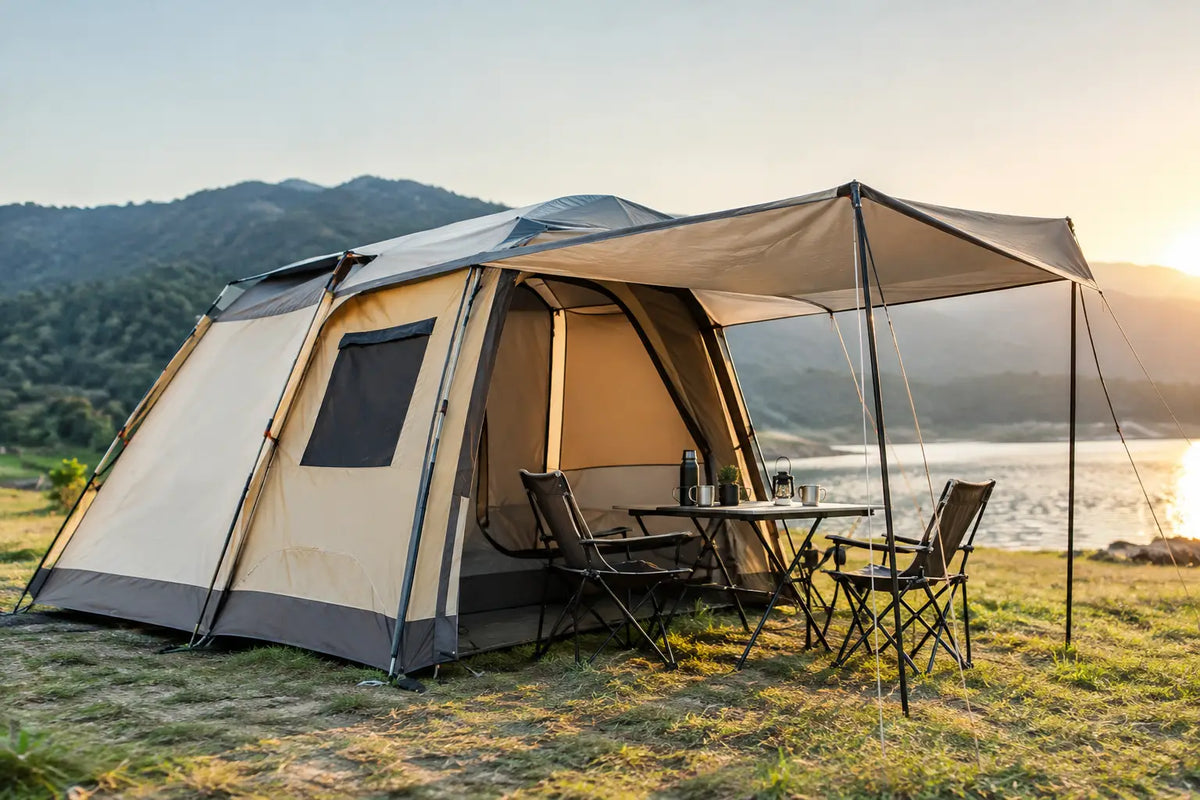
A rooftop tent gets you off the ground. The right extension gives the rest of your camp a purpose. When rain starts sideways across a Welsh hillside or the family needs somewhere to leave muddy boots, the top tent extension features stop being nice extras and become the difference between a compromised night and a comfortable basecamp.
A tent extension, sometimes called an annex, creates usable shelter beneath or alongside your rooftop tent. It can become a changing room, a private wash space, a gear store, a sheltered entrance or simply the dry corner where morning coffee still feels civilised. The best choice is not the one with the longest spec sheet. It is the one that suits how you actually travel, the vehicle you drive and the weather you are prepared to camp through.
Top tent extension features that change camp life
Weather protection that works as a system
Fabric matters, but it is only one part of staying dry. Look for a hard-wearing, waterproof outer material with sealed seams, reinforced stress points and a dependable connection to the tent or awning. Water finds weak joins quickly. A generous overlap at the entrance and well-designed attachment points help keep drips from tracking inside when the weather turns.
Also consider the ground beneath it. A detachable or integrated groundsheet makes an extension feel more like a room, especially on wet grass, gravel or dusty pitches. Yet a fully enclosed floor is not always the answer. If you mainly use the space for cooking or storing wet kit, an open-bottom design can be easier to clean and less likely to trap mud. For changing, sleeping children or creating a lounge, a proper floor earns its place.
Wind performance deserves equal attention. Guy points, sturdy pegging loops and reinforced corners are not glamorous features, but they keep the extension usable when exposed campsites live up to their reputation. An extension should feel like a natural continuation of your shelter, not a sheet of fabric you spend the evening rescuing from the hedge.
Space that earns its footprint
More square metres are useful only if the layout works. Think about what has to happen inside the extension before choosing a size. A couple on a quick overnight stop may need little more than standing room to change and an organised spot for shoes. A family travelling for a week may want a private area for getting dressed, storing chairs and keeping bags out of the car.
Headroom changes the experience more than most buyers expect. Being able to stand while pulling on waterproofs, sorting breakfast or lifting a child out of the rain makes camp feel less like an endurance test. Check where the highest point sits too. Some extensions provide plenty of height near the vehicle but taper sharply at the edges. That can be perfectly practical for kit storage, but less so if you plan to use the space as a changing room.
The door arrangement matters as much as the dimensions. A wide main opening helps when carrying a cool box or folding chairs. Side access can prevent people from constantly crossing the sleeping entrance. If your extension connects below a rooftop tent ladder, make sure the ladder remains easy and safe to use when the room is fully zipped up.
Ventilation without surrendering shelter
British camping rarely gives you one weather condition for long. You may be managing condensation after a cool night, bright sun at breakfast and a shower by lunchtime. Mesh windows, screened doors and adjustable vents make an extension more comfortable across all three.
The useful detail is adjustability. Windows that can be opened for airflow, covered for privacy and secured against rain offer more value than a fixed mesh panel. Fine mesh is worth having in warmer months, when midges can turn an otherwise perfect lochside stop into a hurried retreat.
Ventilation is especially important when an extension is packed with damp jackets, boots and bodies. It will not make wet gear dry instantly, but it reduces the clammy, close feeling that develops in a sealed space. Never use an extension as an enclosed area for fuel-burning stoves, heaters or barbecues. Fresh air is essential, but it does not make combustion appliances safe indoors.
Fast setup, not another campsite project
The promise of vehicle camping is freedom. A tent extension that takes half an hour of puzzling, threading poles and redoing tension points can quietly undermine that freedom, particularly after a long drive.
Prioritise clear attachment, sensible pole design and an intuitive sequence that one person can manage. Zipped connections are tidy and weather-conscious, while keder or channel systems can offer a secure, clean fit where compatible. The best approach depends on the tent and vehicle setup, so compatibility should come before convenience claims.
A quick setup is not just about arriving late. It makes spontaneous stops realistic. You can pull off after work on a Friday, get shelter in place before daylight disappears and wake up somewhere that does not feel remotely like the city. Practise fitting any new extension at home first. Five calm minutes on the drive can save a great deal of cold, wet improvisation at camp.
Privacy that does not feel boxed in
Privacy panels are easy to overlook until you need to change out of wet clothes, put children to bed or use a portable toilet setup away from the main tent. Opaque fabric, zippered entrances and closable windows give an extension genuine flexibility.
There is a trade-off. More walls and panels mean more material, weight and setup time. For solo travellers and couples, a lighter, partly open shelter may be the smarter choice. For families or longer trips, the ability to create a private room can make a compact vehicle feel far more capable.
Look for doors that can be held open securely rather than merely rolled up. This small feature improves airflow, makes moving around camp easier and gives you a sheltered social space when the sun shows up.
Materials and details worth inspecting
Premium camping equipment should look considered, but it also has to survive the unphotogenic parts of travel: grit in the zip, wind-driven rain, muddy dogs and repeated packing. Inspect the details that take the strain.
Zips should feel substantial and be protected by storm flaps where rain exposure is likely. Pole sections and connectors should be strong enough for regular use without adding unnecessary complexity. Reinforced webbing at guy points, durable peg loops and repairable components all point towards equipment built for more than one fair-weather weekend.
Weight and packed size matter too. A larger extension may be excellent once erected but awkward if it consumes the boot space needed for food, recovery gear and everyday luggage. Measure your storage reality, not just the vehicle’s advertised capacity. If you need to remove the extension from the roof tent between trips, manageable packing becomes even more valuable.
Colour has a practical role as well as a design one. Dark fabrics can feel warmer and more private, while lighter interiors improve visibility on grey days. Whichever you prefer, choose a fabric and finish that will still look good after real use, not just the first pitch.
Choose features around your kind of escape
For quick weekend trips, speed, compact storage and a dry entrance are usually the priority. A simple extension with reliable weather protection can turn a short stop into a more relaxed break without loading the car with extra complication.
For family holidays, usable floor space, privacy and standing room move to the front of the queue. You are creating order as much as shelter: a place for shoes, a corner for changing and somewhere to keep the day’s clutter from invading the sleeping area.
For extended overland travel, durability, ventilation and adaptable access become essential. You will pitch on uneven ground, move camp more often and deal with a broader mix of conditions. Choose an extension that can be set up securely without a perfectly level campsite, and that gives you options rather than one fixed layout.
Compatibility remains non-negotiable in every case. Check the tent model, mounting height, ladder position and vehicle clearance before buying. An extension designed for a different profile may technically fit but leave awkward gaps, restrict access or create unnecessary tension in the fabric.
The feature that matters most: confidence
The best tent extension disappears into the rhythm of the trip. It goes up without drama, stays put when the weather shifts and gives everyone enough room to reset after a day outside. That is what makes early starts, wet boots and remote pitches feel like part of the plan rather than a reason to pack up.
Urban Caveman builds for that kind of freedom: less time wrestling with camp, more time parked somewhere worth waking up in. Choose the features that solve your real frustrations, then leave the city with a setup ready for whatever the road, the forecast and your next free weekend bring.
Share:
Are Roof Tents Noisy? What You’ll Hear at Night
Camping Box Versus Roof Tent: Which Fits?