

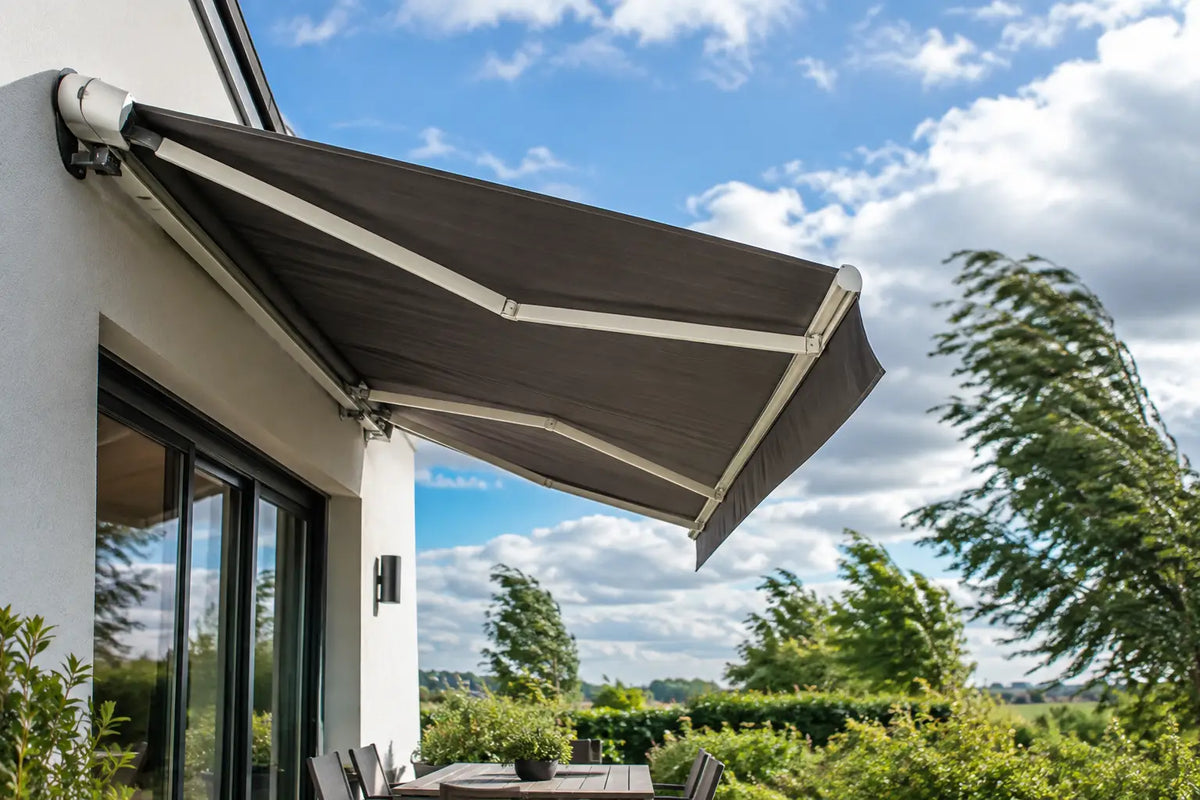
A calm pitch can change fast. One minute you are making coffee beside the car; the next, a gust has turned your shelter into a sail. So, can awnings handle strong winds? Yes, within their intended limits and when they are set up properly. But no awning should be treated as a permanent structure or left open to fight a forecast that is clearly getting worse.
For vehicle campers, the goal is not to prove how much weather your kit can endure. It is to create a comfortable base quickly, then protect it with good judgement. That is how an awning stays useful for years rather than becoming an expensive lesson on a windy ridge.
Can awnings handle strong winds in real conditions?
An awning can manage a breeze and, with the right anchoring, plenty of ordinary UK campsite weather. The challenge is not simply the average wind speed. It is the gusts, the direction of the wind, the exposure of your pitch and the amount of fabric you have deployed.
A fully opened vehicle awning presents a broad flat surface to moving air. That creates lift and sideways force through the fabric, arms, mounting brackets and roof bars. Add a side wall or an enclosed tent room and you gain welcome shelter, but also more surface area for the wind to catch. In a strong, shifting gust, that load rises quickly.
This is why a calm reading on a weather app does not guarantee a calm camp. Wind funnels through valleys, accelerates over headlands and changes direction around woodland, buildings and parked vehicles. A site that feels protected at lunch can be exposed by early evening.
The sensible answer is therefore conditional. A quality awning, correctly fitted to suitable roof bars and carefully secured, can handle moderate wind far better than an unsupported canopy. When gusts become forceful, persistent or unpredictable, retracting the awning is the safe move. Fast pack-down is not a compromise. It is part of a capable outdoor setup.
What decides whether an awning stays secure
The awning itself matters, but setup matters just as much. Strong materials and well-made hardware provide the foundation. Your decisions on site determine how that foundation performs.
The awning design
A compact pull-out awning is quick to deploy and ideal for a lunch stop, beach day or overnight shelter. It also has an open outer edge that relies on support legs and guy lines. Freestanding awnings offer greater flexibility around the vehicle, though they need equally careful anchoring and should never be left unattended in unsettled weather.
Awnings with integrated legs, reinforced hinges, strong mounting plates and durable fabric are better prepared for regular use. That does not make them storm-proof. It means they give you a dependable, refined shelter when you use them within the conditions they were built for.
The way it is mounted
The load from an awning travels into the vehicle through its brackets and roof-rack system. A solid awning attached to unsuitable bars, loose clamps or poorly spaced mounts is only as strong as its weakest connection.
Before a trip, check that your roof bars are rated for the awning and any accessories fitted beside it. Confirm that brackets are compatible, bolts are tightened to the manufacturer’s specification and nothing has worked loose after rough roads or motorway miles. A quick check at home is easier than dealing with movement in the rain at camp.
The pitch and wind direction
Positioning the vehicle is one of the easiest ways to reduce strain. If possible, park so the vehicle takes the first impact of the prevailing wind and the awning opens on the sheltered side. A hedge, woodland edge, stone wall or natural rise in the ground can help, provided you are not pitching beneath unstable branches or in a spot exposed to falling debris.
Avoid open promontories, the top of a hill and wide, treeless fields when windy weather is forecast. They may offer a perfect view, but they give gusts a clean run at your shelter. The better camp is often twenty metres away, lower down and more protected.
How it is anchored
Every support leg should be secure, and every guy line should be doing useful work. Stakes need to suit the ground: standard pegs can struggle in loose sand, stony hardstanding or waterlogged grass. Carry options that match the places you travel, along with straps or weights where pegs are not practical and site rules allow them.
Guy lines should run out at a sensible angle, with enough tension to support the awning without pulling the frame out of shape. Check them again after the first few gusts. Fabric settles, ground gives way and a line that looked fine during setup can become slack surprisingly quickly.
How to set up an awning for wind
Wind-ready pitching does not need to be slow or fussy. It needs to be deliberate. Start by checking the forecast, including gust strength, not just the weather symbol. If a period of strong wind is expected overnight, decide before you set up whether your awning will be packed away before bed.
Open the awning only as far as you need. For a quick brew or a bit of shade, a smaller footprint creates less exposure and takes less time to retract. Set the outer edge slightly lower than the vehicle side when rain is likely, so water can run off rather than pooling in the fabric. Never allow water to gather overhead - the added weight can damage the awning and make it far less stable.
Secure the legs first, then add guy lines before the wind picks up. Do not wait for conditions to worsen. If you are using walls or an awning room, fit them with care and reassess the weather afterwards. The extra protection is excellent in light rain and a cool breeze, but enclosed fabric can catch far more wind than an open canopy.
Keep a clear route to the awning case. Chairs, cooking gear and bikes should not block a quick pack-down. If the forecast changes, you want to be able to release the lines, fold the legs and stow the fabric without scrambling around camp in the dark.
Know when to pack it away
There is no single wind speed that applies to every awning, vehicle, pitch and setup. Always follow the guidance supplied for your specific model. In practice, the decision should be based on what the wind is doing, not whether you think the kit can survive another gust.
Pack the awning away if the frame begins to flex repeatedly, the fabric is snapping hard, pegs are shifting, guy lines will not stay tensioned or gusts are strong enough to make you hesitate. Do the same before leaving camp, even if the afternoon looks settled. Weather changes, and an unattended awning has no one to respond when it does.
If rain and wind arrive together, act early. Wet fabric is heavier, visibility drops and handling a large canopy becomes harder. Two people can usually close an awning neatly and quickly, especially when one manages the fabric while the other releases legs and lines.
Small habits that protect your kit
After each trip, let the awning dry fully before storing it. Damp fabric can develop mildew, while grit in the mechanism can affect smooth operation. Inspect the seams, brackets, legs, zips and guy-line attachment points for wear before your next escape.
It is also worth practising pack-down once at home. Familiarity makes a real difference when a coastal breeze turns into a squall. The best vehicle-camping gear should feel effortless, but effortless usually starts with knowing exactly how it works.
A good awning expands life beyond the city: more space for breakfast, dry boots, a card game, or a quiet evening outside. Give it a sheltered pitch, proper anchors and the permission to come down when the weather demands it. That is not playing it safe. That is travelling with confidence.
Share:
Do Roof Tents Fit Estates? What to Check First
Elevated Campsite Setup for Better Weekends