

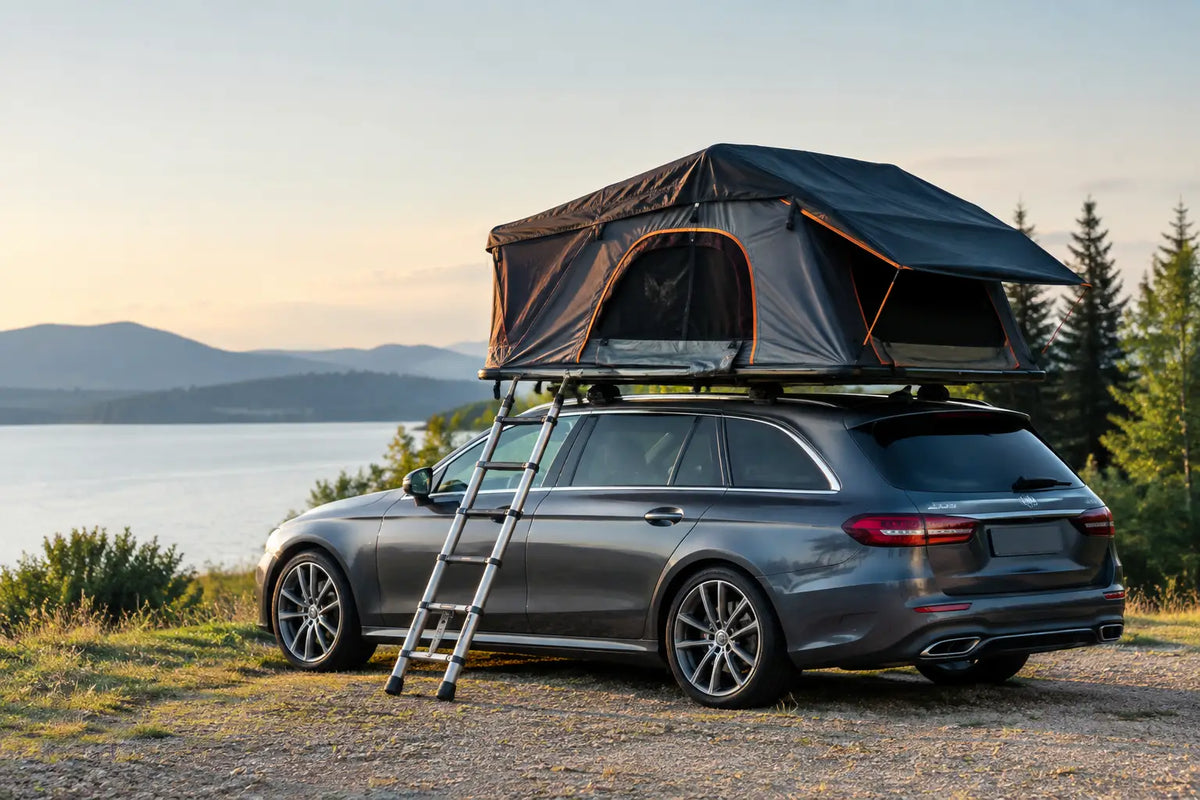
An estate is already built for getting more out of a weekend. It carries bikes, boards, dogs, luggage and the last-minute extras that make a proper escape possible. Add the right roof tent and it can carry your bedroom too. So, do roof tents fit estates? In many cases, absolutely - but the answer depends on the roof, the rack and the numbers, not simply the shape of the car.
The good news is that estates are often excellent rooftop-tent vehicles. Their long rooflines can provide a stable base, their boot space keeps camp kit close at hand, and they remain easy to live with between trips. The key is fitting a tent system that respects your vehicle’s limits. Comfort starts with confidence.
Do roof tents fit estates safely?
A roof tent can fit an estate safely when the vehicle’s approved roof load, roof bars and mounting arrangement are all suitable for the tent’s weight. This needs checking before you buy, especially if you are choosing a larger hard-shell model or planning to travel with a family.
Start with the vehicle handbook. Look for the maximum roof load, sometimes called the dynamic roof load. This is the maximum weight permitted on the roof while the car is moving. It includes everything above the roof itself: the bars, any feet or fitting kit, the tent, and any other accessories.
That total matters more than the tent weight alone. A 55 kg tent on bars and fittings weighing 8 kg is a 63 kg roof load. If your estate is rated to 60 kg, it is not the right combination, even if the tent appears to physically fit.
Do not assume a bigger estate has a bigger roof rating. A long, practical car can still have a modest allowance, while another model with similar dimensions may be approved for more. Check the specification for your exact model, year and roof type rather than relying on a forum comment or a similar-looking car in a car park.
Dynamic load versus sleeping weight
One detail confuses plenty of first-time roof-tent owners: the roof load limit is usually for driving, not for camping. Once parked, the tent’s base and the roof bars spread the weight across the mounting points. This is why two adults can sleep in a tent that weighs more than the vehicle’s listed dynamic roof load.
That does not mean the parked limit can be ignored. The tent, bars and vehicle must still be designed and installed as a complete system. Follow the tent manufacturer’s stated capacity, use compatible bars, and fit every clamp and bolt to the specified torque. If the instructions for the car, bar system or tent conflict, take the more conservative route.
It is also worth thinking beyond the headline weight. A roof tent raises your centre of gravity, which you will notice in crosswinds, on roundabouts and when changing direction. Drive smoothly, leave more braking distance and avoid treating a loaded estate like it is running empty. The destination is the point. There is no prize for arriving first.
The roof bars matter as much as the tent
A roof tent does not mount to decorative rails alone. It needs properly rated crossbars attached to suitable roof rails or fixed mounting points. Many estates come with flush rails, raised rails or factory fixing points, but those setups do not automatically share the same capacity.
Choose bars that are specifically approved for your car and rated for the full dynamic load. The lower rating always wins. If the vehicle allows 75 kg but the bars are rated to 60 kg, 60 kg is your ceiling. If the bars are strong enough but their fitting kit is not approved for your roof, they are not the answer either.
Bar spacing is important too. Roof-tent bases need adequate support across their length, with crossbars positioned within the tent manufacturer’s recommended range. An estate’s longer roof can make this straightforward, but a long roof is not permission to place the bars wherever looks right. Measure, check the instructions, then tighten everything correctly.
Avoid improvising with bargain bars, unbranded adapters or homemade brackets. This is the equipment holding your sleep system to the car at motorway speed. Premium kit earns its place here because it is engineered for the job, not because it looks tougher in the driveway.
Estate-car details that can change the fit
The most suitable estate is not always the one with the largest boot. Roof design makes a real difference.
Raised roof rails are often the simplest starting point because compatible bars can sit at a practical width and height. Flush rails can work just as well with the correct vehicle-specific fittings. Fixed-point roofs can be exceptionally tidy and secure, although bar placement may be less flexible.
Panoramic glass roofs deserve extra attention. Some vehicles with glass roofs are approved for roof bars and roof loads; others have lower limits or restrictions. Never clamp or load a system onto a glass roof unless the car manufacturer explicitly permits the relevant bar setup.
The tailgate is another small detail with a big impact on campsite convenience. Most roof tents will sit above the rear of an estate without a problem, but overhang and ladder position vary. Before choosing a tent, consider whether the boot can open fully with the tent installed. Losing easy access to food, chairs and bedding soon becomes tiresome when the weather turns.
Also think about aerials, shark-fin units and roof-mounted spoilers. A tent may clear them, but clearance alone is not enough. You need room to position the bars correctly and open the tent without rubbing, forcing or bending anything.
Choosing the right tent size for an estate
A compact, low-profile tent is often the natural match for an estate used every day. It keeps weight manageable, reduces wind noise and preserves the clean driving feel that makes estate cars so good for long road trips. For couples and solo travellers, that can be the sweet spot: a fast setup, a proper mattress and less bulk on the roof.
Larger tents can work, provided the vehicle and bars have the load capacity. They make sense when you need extra sleeping room or want space for a child, but there is a trade-off. More room generally means more weight, greater frontal area and a more noticeable effect on fuel use and handling.
Hard-shell tents suit drivers who value rapid deployment and a refined, contained profile. Many open in minutes, which changes the rhythm of a Friday-night getaway. Pull in, park level, open the tent and put the kettle on. Soft-shell designs can offer generous internal space for their footprint, but may take longer to pack away and can be bulkier once folded.
There is no universal best choice. The right tent is the one your estate can carry within its limits and that you will actually want to use on a wet Sunday morning as much as on a bright July evening.
A quick compatibility check before you commit
Before ordering, gather the facts rather than guessing from photographs. Confirm your car’s dynamic roof load, identify the roof type, and find bars rated and approved for that exact vehicle. Add the weight of the bars and fitting kit to the tent weight, then make sure the total stays below the vehicle limit.
Next, check the tent’s required crossbar spacing and mounting method. Consider tailgate clearance, aerial position and whether the tent will overhang the windscreen or rear of the car. Finally, assess how the packed height will affect car parks, garages and your usual route under low barriers.
If any part of the setup is unclear, ask for fitment advice with the exact make, model, year and roof configuration. A considered check before purchase is far better than discovering a limitation when the tent arrives.
Make the estate your launch point
An estate with a roof tent is not trying to be a campervan or an off-road lorry. It is something more flexible: the car you use for the school run, the shop and the commute can become a comfortable base beyond the city by Friday evening.
Urban Caveman is built around that shift - less time wrestling with ground sheets and more time waking up somewhere worth the drive. Get the fitment right, pack with purpose, and your estate is ready for more than the weekly routine. The next clear patch in the calendar can become a night under the trees.
Share:
How to Level a Camping Vehicle on Any Pitch
Can Awnings Handle Strong Winds? What Matters