

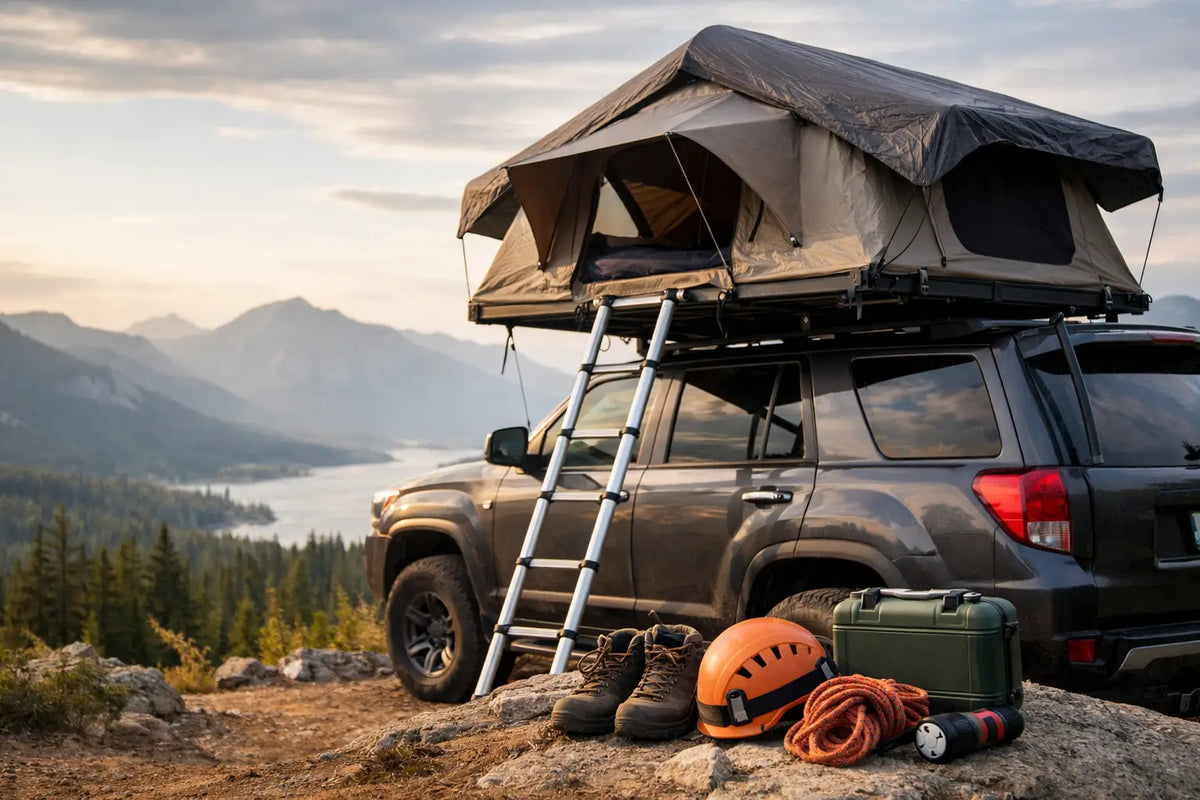
The road out of the city should feel like freedom, not a gamble. So, are rooftop tents safe? Yes - when the tent, vehicle, roof bars and setup are properly matched, fitted and used with care. A quality rooftop tent gives you an elevated, comfortable place to sleep, but it is still a piece of vehicle-mounted equipment. Treat the setup seriously and it can be one of the most secure, practical ways to camp.
The biggest safety factor is not whether you sleep above the ground. It is whether every part of the system is right for the load, the conditions and the way you travel.
Are Rooftop Tents Safe on UK Roads and Campsites?
A correctly installed rooftop tent is designed to stay secure at motorway speeds, through changing weather and across the miles between home and camp. The tent itself attaches to compatible roof bars or a roof rack, which in turn must be rated and properly fitted to your specific vehicle.
At camp, a hard-shell or soft-shell rooftop tent spreads its occupied weight through the vehicle roof, rack and mounting system. This is why rooftop tents can safely hold one or more sleepers even though the vehicle's published roof-load figure may look modest at first glance.
The key is understanding the difference between dynamic and static roof load. Dynamic load is the weight your vehicle can carry while driving. It includes the tent, roof bars or rack, and any other gear fixed to the roof. Static load is what the vehicle can support while parked. It is usually far higher because the forces created by braking, cornering and uneven roads are no longer in play.
Never assume either figure. Check your vehicle handbook, the roof-bar or rack manufacturer’s rating, and the tent manufacturer’s specifications before you buy or fit anything. The lowest-rated component sets the limit.
A rooftop tent is not automatically safe simply because it fits on the roof. Nor is a lower vehicle automatically a better choice. A compact hatchback, estate, SUV or 4x4 can all work well with the right system. Compatibility, mounting quality and sensible loading matter more than appearances.
Start With the Roof, Not the Tent
The safest rooftop-tent setup begins before the first campsite. Establish your vehicle’s dynamic roof-load limit, then add up the total weight of the tent, roof bars or rack, mounts, awning brackets and any roof-mounted accessories. Stay within the limit with margin to spare.
Use vehicle-specific roof bars or a rack from a reputable manufacturer, fitted exactly as instructed. Universal solutions can be excellent when they are genuinely compatible, but improvised adapters, worn fittings and guesswork have no place here. The mounting channels and clamps on the tent must also suit the crossbar spacing and profile.
After fitting, check every mounting point before your first journey. Then check again after a short drive, after the first few longer journeys, and as part of your regular pre-trip routine. Road vibration can settle hardware slightly, especially after a new installation. Tighten fixings only to the specified torque - overtightening can damage bars, rails or mounts.
Keep the roof load disciplined. Heavy kit belongs low in the vehicle, not strapped to the top of a tent. A rooftop tent already raises your centre of gravity, so piling on recovery boards, fuel containers and bulky boxes can affect handling and push you beyond your roof limit.
Drive for the Load You Carry
A rooftop tent changes the height, weight and aerodynamics of your vehicle. That does not make road trips difficult. It simply calls for a calmer, more deliberate driving style.
Expect more wind noise and some impact on fuel economy. Be aware of crosswinds on exposed bridges, open moorland and motorways, particularly with a taller vehicle or a large tent. Reduce speed when conditions turn gusty, leave extra braking distance and take bends smoothly. Sudden steering inputs are never a good idea with a loaded roof.
Height is the practical hazard many drivers forget. Measure your vehicle with the tent installed and keep that figure visible in the cabin. Multi-storey car parks, height-restricted barriers, low branches and some drive-throughs can become expensive surprises. In the UK, low railway bridges deserve particular attention.
Before moving off, make sure the tent is fully closed, all straps are secure, the cover is correctly fastened and no bedding, poles or fabric are caught outside. A quick walk around the vehicle takes seconds. It can save a ruined weekend.
A Stable Pitch Makes a Safer Night
At camp, choose firm, level ground whenever possible. A rooftop tent can feel remarkably solid, but a steep sideways slope makes sleeping uncomfortable and puts extra stress on the ladder and vehicle suspension. Use levelling ramps if needed, and apply the handbrake fully before opening the tent.
If your tent uses a ladder for support, set it at the recommended angle and make sure both feet are planted on stable ground. Do not rest it on loose gravel, a slippery rock or a drainage channel. Check that the ladder locks properly and that its telescopic sections are clear of mud and grit.
With fold-out designs, the ladder often forms part of the tent’s support structure. This means its position matters. Do not move the vehicle once the tent is open, and do not allow anyone to climb in until the ladder is secure.
Think about what is around you too. Avoid pitching beneath dead branches, on exposed cliff edges or in places vulnerable to rising water. Elevated sleeping does not remove the need for good campsite judgement. It just gives you a better mattress and a clearer view when you have made a smart choice.
Wind, Rain and Weather: Know the Limits
A well-built rooftop tent is made for real weather, not just postcard sunsets. Waterproof fabric, protected zips, a stable shell or frame, and a properly tensioned rainfly can make wet UK nights far more comfortable than ground camping.
But all-weather capability is not a reason to ignore severe conditions. Strong winds can put significant pressure on any tent, particularly when it is raised above the vehicle. If forecasts show high gusts or storm conditions, choose a sheltered site, orient the vehicle thoughtfully and avoid deploying awnings or extensions that catch more wind. In extreme weather, the safest move may be to pack down and seek more secure shelter.
Rain creates its own small risks. Keep the ladder rungs and your footwear free from mud where you can, use the handrails if your setup has them, and take your time climbing down at night. A head torch is a simple upgrade that prevents a surprising number of campsite mishaps.
Never use a barbecue, camping stove, heater or any fuel-burning appliance inside the tent. Elevation does not protect you from fire or carbon monoxide. Cook outside, allow airflow, and keep flames well away from tent fabric, vehicles and dry grass.
Sleeping Up High With Children and Pets
Rooftop tents can work brilliantly for couples, friends and families, provided the sleeping arrangement matches the tent’s capacity and your group’s needs. Respect the stated occupant and weight limits. More people in a tent is not just about space - it also affects how easily everyone can enter, exit and move around safely.
For young children, assess the ladder honestly. They should be able to climb it confidently with supervision, especially after dark or in wet conditions. Keep the tent entrance zipped when everyone is inside, explain the rules before bedtime, and avoid leaving children unattended in an open tent.
Pets need the same practical consideration. A large dog may be happier in a vehicle annex, ground tent or a secure sleeping space inside the car rather than being carried up and down a ladder. Do not force a setup that does not suit the animal.
Care Is Part of Safety
A rooftop tent earns its place through repeated use, so inspect it regularly. Look over the fabric, zips, hinges, gas struts, ladder locks, mounting hardware and roof bars. Clean mud from moving parts, dry the tent thoroughly before storing it, and address small damage before it becomes a failure on a remote trip.
The same applies to your vehicle. Roof rails, mounting points and bars should be free from corrosion, cracks and distortion. If you have had a collision, struck a low obstacle or noticed unusual movement or noise from the roof, stop using the setup until it has been checked.
Premium equipment should make adventure feel effortless, not careless. That is the standard Urban Caveman is built around: durable design, straightforward setup and confidence when the weather has other ideas.
Your best safety upgrade is a simple habit: before every departure and every bedtime, pause for two minutes. Check the mounts, the load, the ladder, the ground and the forecast. Then climb in, switch off the city, and sleep well knowing your camp is ready for the night.
Share:
Best Rooftop Tents for Better Weekend Escapes
Mount Car Awning for Faster Campsite Comfort