

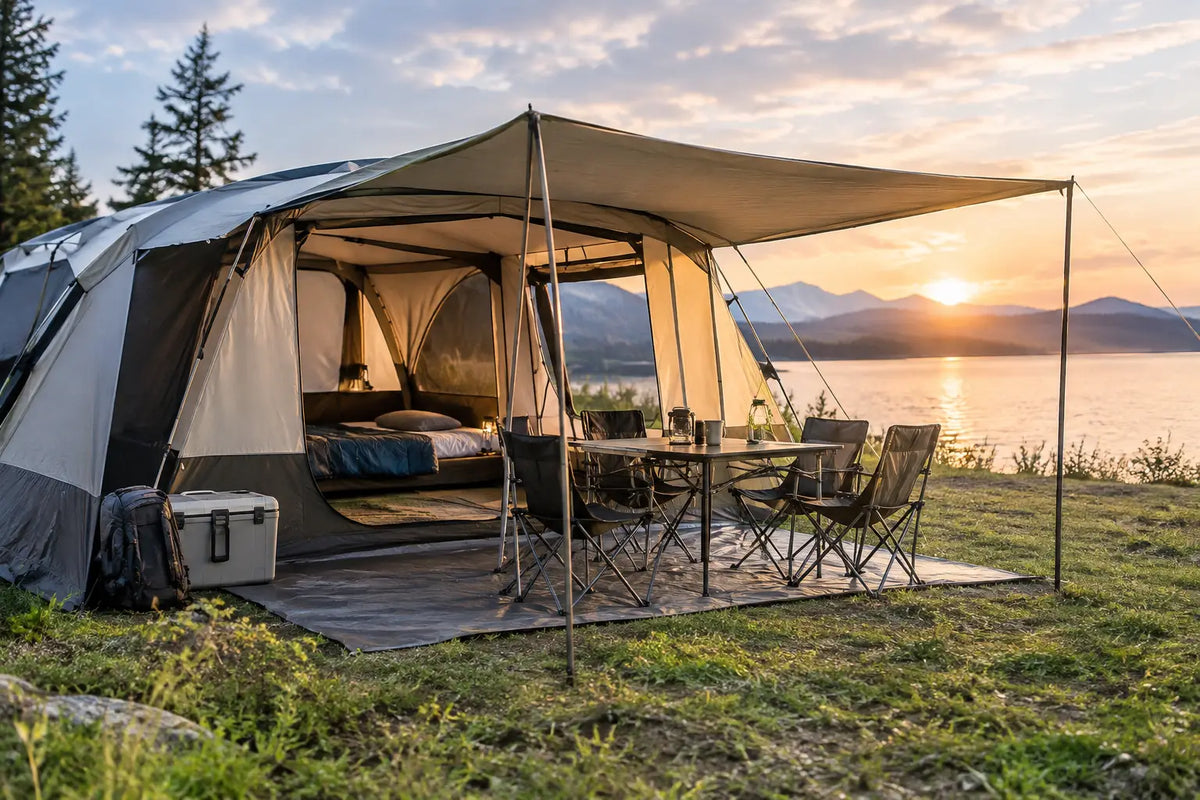
A rooftop tent gets you sleeping well. Tent extensions change how you live at camp.
When rain starts sweeping across the campsite, the difference is immediate. Instead of climbing straight from the ladder into your sleeping space, you have somewhere to kick off muddy boots, make a brew, get changed and wait out a shower without retreating to the car. That extra sheltered square footage turns a vehicle setup from a place to sleep into a base for the weekend.
For road trips, family breaks and longer off-grid routes, that matters. British weather rarely sticks to the forecast, and a good camp should still feel good when the clouds roll in.
What tent extensions actually add
A tent extension is an enclosed or partially enclosed shelter that attaches to your rooftop tent, awning or vehicle-side setup. Its job is simple: create usable ground-level space that is protected from wind, rain, sun and campsite traffic.
The best setups feel less like an add-on and more like a natural part of the camp. You climb down from the tent into a covered entrance, rather than onto wet grass. You can store chairs, bags and cooking kit out of sight. You can leave the doors open on a bright morning or close the walls when the temperature drops.
That flexibility is the point. A roof tent gives you an elevated bedroom. An extension creates a hallway, lounge, kitchen area and changing room depending on what the trip demands.
It is also a practical answer to one of vehicle camping's biggest compromises: your car has limited interior space, while a standard tent often means another long setup at the end of a drive. An extension uses the system already on your vehicle, so your camp expands without starting from scratch.
Why tent extensions earn their place in the UK
On a warm, dry overnight stop, almost any shelter can work. The value of an extension becomes clearer on a coastal pitch in April, a wet bank holiday in Wales, or a windy morning in the Highlands.
First, it gives wet gear somewhere to go. Coats, walking boots, dog leads and recovery gear do not belong in your sleeping area, but leaving them exposed outside is hardly ideal. A sheltered vestibule keeps the clutter out of the tent while keeping it close at hand.
Second, it creates privacy. Campsites can be busy, especially during school holidays. A properly designed extension gives you a discreet place to change, dry off after a swim or settle children before bed. For couples, it adds a little breathing room between the car park and the mattress. For families, it can be the difference between an organised camp and kit spread across every available patch of grass.
Third, it makes poor weather manageable rather than trip-ending. You still need to pitch thoughtfully and respect the conditions. No fabric shelter is invincible in severe wind. But waterproof material, secure attachment points and sensible guying-out give you somewhere to cook, eat and regroup when the forecast becomes less generous.
Choose the extension around how you travel
There is no single best tent extension. The right choice depends on your vehicle, your sleeping setup and the kind of trips you actually take.
Weekend escapes and spontaneous overnights
If your ideal Friday ends with leaving the city and waking near the coast, speed matters. Look for an extension that attaches quickly, packs down cleanly and does not require a complicated collection of poles, straps and instructions.
A compact enclosure is often enough. You want a protected entrance and space for the essentials, not a structure that turns a one-night stop into a campsite engineering project. Fast setup protects the spontaneity that made you leave in the first place.
Family camping and longer stays
More people create more kit. For a family, a larger extension can work as the camp's shared room: a dry place for breakfast, board games, jackets and the inevitable pile of shoes by the door.
Prioritise standing room, multiple access points and windows that let in daylight without sacrificing privacy. Ventilation matters too. A sealed space may keep rain out, but it can quickly feel damp and stuffy when several people are moving through it.
Off-grid travel and changing conditions
For longer routes, durability and adaptability should lead the decision. Look for weather-resistant fabric, strong zips, reinforced stress points and guy-line positions that let you secure the shelter properly. Mesh panels are useful in summer, while solid walls offer more protection when the temperature falls.
Think about the ground beneath you as well. A built-in or compatible groundsheet can make the space more comfortable and easier to keep clean, but it may be less useful on rocky, muddy or uneven pitches. In those conditions, a groundless shelter can be simpler to manage and quicker to dry before packing away.
Fit matters more than extra features
Before choosing tent extensions, check compatibility with your exact roof tent, awning or vehicle mounting system. Attachment height, rail type, ladder position and door orientation all affect whether the finished setup works as intended.
Measure rather than guess. A shelter that looks right in product photography can feel awkward if the vehicle sits higher or lower than expected. You need enough coverage around the ladder, a practical entry point and a shape that does not obstruct car doors or access to the boot.
Pay attention to how it handles uneven ground. Most UK campsites are not perfectly level, and wild pitches rarely are. Adjustable straps, flexible pegging points and enough fabric tolerance at the base make a noticeable difference. A beautifully designed extension is only useful if it can cope with the pitch you have, not the one you imagined.
Storage deserves the same attention. Check the packed size, weight and whether it can travel inside the roof tent or needs a separate place in the vehicle. Premium kit should make travel easier, not consume the space needed for food, clothing and the people coming with you.
Set it up for comfort, not just cover
The most effective camp layouts separate sleeping, cooking and storage without making the site feel crowded. Use the extension as the transition zone between your vehicle and the outdoors. Keep boots, coats and wet kit near the entrance. Place a compact chair or two where you can sit without blocking the ladder. If you cook under cover, keep proper clearance, airflow and manufacturer guidance front of mind.
Orientation is equally important. Face the most protected side away from the prevailing wind where possible, and peg out the structure before the weather turns. On exposed ground, use every appropriate guy point rather than assuming the fabric will stay calm overnight.
Ventilate even when it is cold. Condensation builds when warm bodies, wet clothing and limited airflow meet in an enclosed space. Opening mesh panels or high vents slightly can keep the extension more comfortable without inviting the weather inside.
At pack-down, do not rush wet fabric into a sealed bag for days. Shake off debris, open it out at the next opportunity and let it dry fully. This small habit protects the material, prevents unwanted odours and keeps your setup ready for the next escape.
The trade-off worth making
An extension adds weight, setup time and another piece of kit to care for. For travellers who move every day and only stop to sleep, a simple awning may be enough. For anyone who wants camp to feel like a place to spend time, rather than merely endure between drives, the extra structure is usually worth it.
Urban Caveman builds vehicle-camping gear around that distinction. You should not have to choose between getting out there and being comfortable once you arrive.
The best tent extension is not the largest one or the most feature-heavy. It is the one that fits your setup, suits your pace and gives you a dry, calm place to land when the road ends. Leave the city behind, keep the comfort, and make every pitch feel more like yours.
Share:
Family Car Camping Setup for Better Weekends
How to Level a Camping Vehicle on Any Pitch