

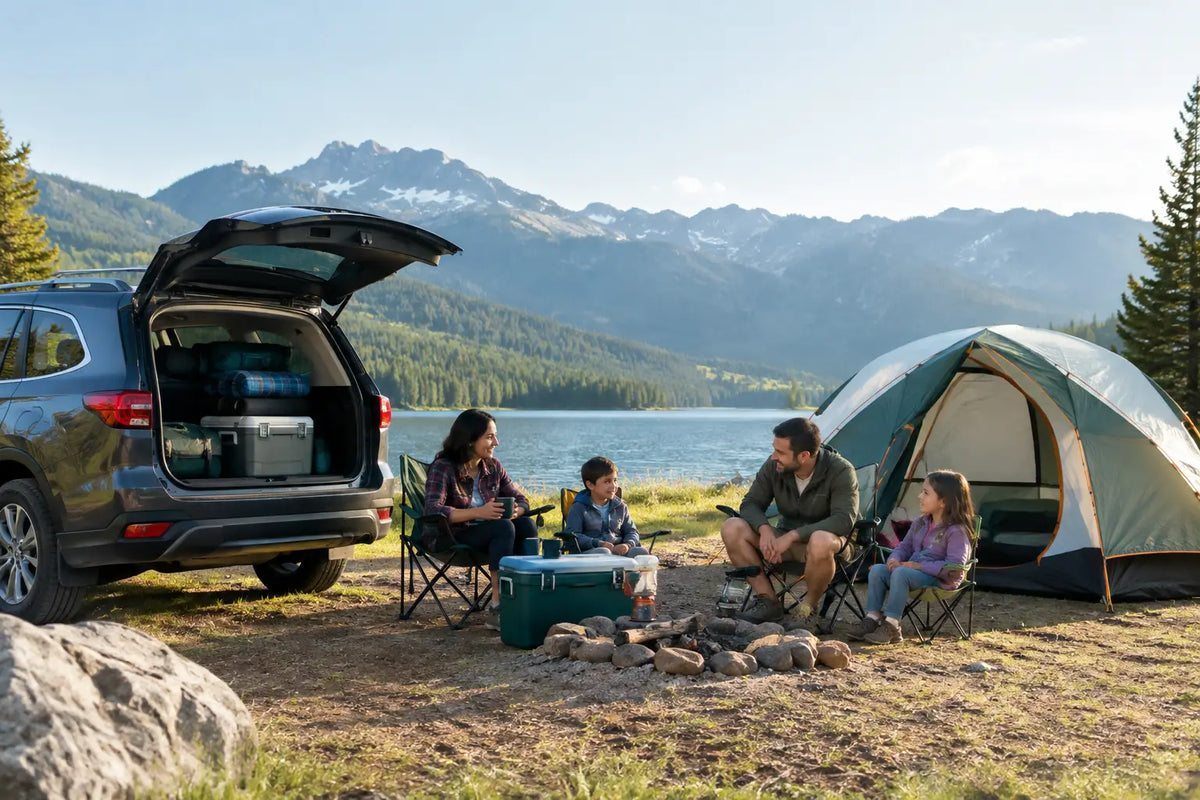
The back seat is full of snacks, waterproofs and somebody’s one non-negotiable soft toy. That is family travel. A well-planned family car camping setup does not try to make it minimalist. It makes it easy: a dry place to sleep, a calm place to eat, and enough order that the first hour at camp does not feel like moving house.
The goal is not to carry more gear. It is to build a basecamp that turns a Friday-night drive out of the city into a proper weekend away. With the right layout, your vehicle becomes the starting point for fresh air, muddy boots, slow breakfasts and an earlier switch-off from daily life.
Start with the family, not the kit
Every family camps differently. A couple with one toddler needs a different arrangement from a family of five with teenagers, a dog and bikes on the tow bar. Before choosing a tent or filling storage boxes, be clear on the trips you actually want to take.
Think about how many people need to sleep under cover, whether children are old enough to sleep separately, and how often you will be packing up in rain. Consider your vehicle too. A compact SUV can make an excellent weekend camper, but it rewards a more disciplined approach to storage than a larger 4x4 or estate.
The strongest setups create zones. Sleeping stays dry and protected. Cooking and eating sit under cover but outside the sleeping space. Wet shoes, muddy layers and camp chairs have their own place. When every item has a job and a location, children can help rather than becoming another logistical problem.
Build your family car camping setup around sleep
Bad sleep is the quickest way to turn a family escape into an early departure. Ground tents can work brilliantly, especially for larger families who need one big shared room. But they also demand a flat pitch, a longer setup and more patience when the weather turns.
A rooftop tent changes the rhythm. It puts sleeping space above the mud, away from ground-level damp and ready in minutes rather than after a battle with poles. For families, the most practical approach is often a split sleeping arrangement: adults and younger children in the rooftop tent, with older children in a tent extension or ground tent below. It gives everyone breathing room without scattering the family across the campsite.
There is a trade-off. Rooftop tents add weight and height to your vehicle, and you need to check roof-bar and roof-load ratings carefully. They also require a ladder, which may not suit very young children without close supervision. But for families who camp regularly, the speed, elevated comfort and smaller packed footprint can make every arrival feel more controlled.
Keep bedtime familiar
Children do not need a perfectly styled camp bedroom. They need warmth, routine and a little familiarity. Use proper sleeping bags or duvets suited to the forecast, insulated sleeping mats where needed, and a small rechargeable light for each child. Keep pyjamas, toothbrushes and the next day’s clothes in a dedicated soft bag rather than buried in the boot.
A warm layer underneath matters as much as one on top. Even summer nights in the UK can turn cold after sunset, particularly on exposed coastal sites, in the Peaks or higher ground in Wales. A good mattress and insulated bedding are not luxuries. They are what make the second night as enjoyable as the first.
Create shelter beyond the tent
A family campsite needs a living room. An awning gives you one.
Set alongside the vehicle, it creates a covered zone for breakfast, card games, changing out of wet clothes and waiting out a passing shower. Add side walls or a tent extension and that sheltered patch becomes even more useful: a protected entrance to your sleeping space, a changing room, or extra accommodation for children who want their own corner.
This is where a premium vehicle-camping system earns its place. It is not simply about looking the part in a woodland clearing. Fast, reliable shelter means you are more likely to stop somewhere beautiful when the forecast is mixed - which, in Britain, is most weekends.
Position the awning with the wind in mind. If possible, face the open side away from the prevailing gusts and use proper straps, pegs and guy lines. Never treat an awning as fit-and-forget shelter. Wind can arrive quickly, especially near the coast, and packing it away for ten minutes is better than repairing it for weeks.
Make cooking calm, not complicated
Family camping food should be satisfying, but it does not need to become an outdoor cooking show. Plan meals that use one pan, one pot or a simple grill. Pasta, wraps, jacket potatoes, sausages, eggs and pre-prepared chilli all travel well and keep washing up under control.
Use a lidded crate or camp kitchen box for the essentials: stove, fuel, lighter, pan, utensils, washing-up bowl, tea towels and a small chopping board. Put food in a separate cool box or fridge, with breakfast and snacks near the top. This small distinction prevents the familiar ritual of unloading half the car to find the teabags.
Keep your cooking area outside the tent and well ventilated. A stable table is worth the space it takes, particularly when hot drinks and smaller children are involved. For evening meals, a lantern with a warm, adjustable setting creates enough light to cook without flooding the entire pitch in harsh glare.
Pack by access, not by category
The boot should work like a compact expedition store, not a pile of good intentions. Load heavy items low and close to the rear seats. Put the things you need first at the back: awning kit, camp chairs, cooking box and a weather layer. Bedding and overnight bags can sit deeper in the vehicle if the rooftop tent holds the main sleeping space.
For a practical family car camping setup, use clear or labelled boxes for four areas:
- cooking and food
- clothes and bedtime essentials
- camp living, including chairs, lights and games
- repair, safety and dirty gear
Keep a small day-use bag in the front of the car with sun cream, insect repellent, plasters, water bottles, snacks, charging cables and a map or downloaded route. It saves you from digging through camp equipment every time someone needs something five minutes into a walk.
Plan for British weather without packing the house
The UK rewards optimism but punishes poor preparation. Pack waterproof outer layers, spare socks and a dry change of clothes for every child, even during a warm spell. A boot tray or waterproof bag for shoes stops wet grass and mud travelling straight into bedding.
You do not need to bring every possible contingency item. Instead, choose equipment that performs across conditions. A durable rooftop tent, a properly anchored awning, warm sleeping layers and waterproof storage cover most of the situations that make family camping uncomfortable.
Check the site rules before you leave. Some pitches have restrictions on vehicle placement, open flames, generators and awnings. If you are camping off-grid, be more deliberate still: carry sufficient water, take every bit of rubbish home, and leave the spot looking untouched.
Give children a role at camp
The quickest way to make camping feel like a family adventure rather than an adult project is to give everyone a responsibility. Young children can collect kindling where permitted, lay out chairs or pack their own bedtime bag. Older children can help with the awning, cooking prep, washing up and route planning for the next day.
It will not be flawless. Someone will still forget their coat. Someone will drop a biscuit in the grass. That is part of the point. Camping gives children useful freedom within a safe boundary, and gives adults a chance to stop managing every minute.
Urban Caveman gear is built for this version of the outdoors: quicker to deploy, dependable when conditions change, and comfortable enough that getting away becomes a habit rather than a rare operation.
Test the setup before the big trip
Do one dry run at home. Open the tent, practise the awning, check the ladder, test lights, and make sure the cooking kit has fuel. Time your setup without rushing. This is especially valuable before a first family trip, because the campsite is the wrong place to discover a missing peg or a roof box that blocks the tent’s opening.
Then leave a little space in the plan. Do not schedule a long hike, a complicated dinner and a late bedtime on arrival day. Set up, eat something simple, take a short walk and let camp become familiar. The best family weekends are rarely the most ambitious ones. They are the ones where everyone has room to settle into the wild.
A good campsite does not have to be remote, expensive or dramatic. Find a view, make a warm drink, watch the children turn a patch of grass into their own small world, and remember why the car was built for more than the commute.
Share:
Premium Overlanding Gear Buyers Guide for UK Trips
Tent Extensions That Make Camp Feel Bigger